Stories Set in Medieval Times: Examining Serfs and Fallacies

Greetings! Today, we are going to go back in time and look at life during medieval times to build a broader context for reading stories set in medieval times. Our perspective is going to be focused on the hierarchical structure of medieval society and the life of a serf. Additionally, I’ve added misconceptions about medieval society to create a more robust reading. All of this will provide needed background knowledge for medieval literature.

The Life of a Serf

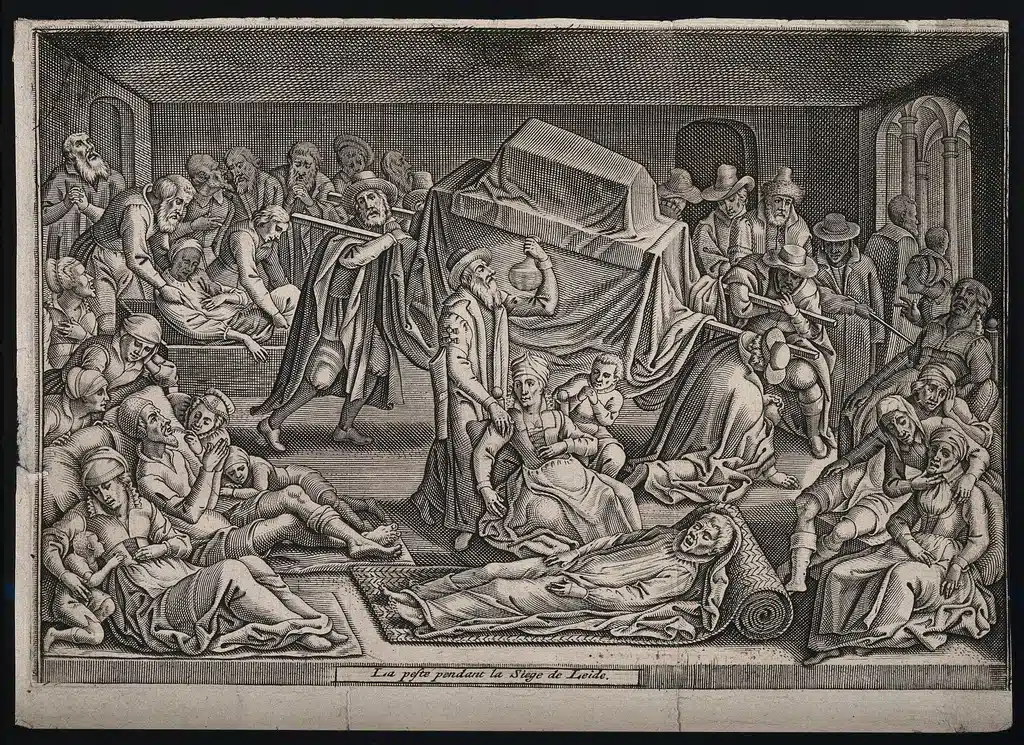
Farming and slaving away at a tract of land day and night for 30 years and then dying an early death because of the plague after you lost most of your children in childbirth sounds like a terrible life. But such was the life of a serf. Knowing more about the lives of serfs can help us understand stories set in medieval times more clearly.

Life as fodder in the dark ages

Life as a serf was hard and laborious compared to the modern world, not that back-breaking labor has changed considerably since the dawn of time. However, the major difference is the exchange of labor for basic necessities, and perhaps that’s not all that different in modern times.

During the medieval period, serfs played a crucial role in the feudal system. These “unfree labourers” were an integral part of the societal structure, working on the land owned by feudal lords. While they did not have the privilege to work their own land, they were provided with certain benefits in return for their labor.

Their homes were “simple structures based on a wooden frame.” They built the walls and insulated them with the earth, and the roof was straw. These were homes of necessity. The most common resources found locally composed these houses.

Additionally, the clothing of serfs served the most basic purposes. Medieval fashion was reserved for the lords and ladies. Meanwhile, much of serf clothing entailed a blouse, boots, trousers, a hat on rainy days, a sheath for a knife, and gloves for labor.

Meanwhile, their diets were “monotonous.” They consumed “brown bread and cheese” and “pottage” once a day, which was “a broth of grains, vegetables and possibly some meat or fish.” With these meager and lean luxuries, it was no surprise that starvation was a likely outcome during a difficult season (Havlidis).

The medieval social contract

The lords of the land did not consider serfs “slaves.” They were not owned by their lords. Instead, they were bound to the land, and they were forced to work for the lord who owned it. In exchange for their labor, serfs were granted physical and legal protection. This ensured their safety and security within the feudal manor. Such protection was particularly significant. In an era marked by political instability and the constant threat of invasions and raids, one fought to feel safe.

Moreover, serfs were entitled to work a separate piece of land known as a “villein’s croft.” The lords would give them a small plot of land to raise crops for their own families. The arrangement between the lord and the serf provided a degree of self-sufficiency; though minute and deliberate. Thus, they had access to basic necessities, such as food and shelter, which gave them a reason to not flee into the night.

The life of a serf was demanding, as they had to work in the fields and perform other services for their lord. However, serfs also had communal responsibilities within their village, such as maintenance or the construction of communal buildings. These communal activities fostered a sense of community among serfs.

Social standing in the medieval world

Despite their obligations to the lord, serfs held a particular social position in medieval society (however small). They were considered part of the “peasant class.” the peasant class also included other laborers. However, serfs had a more “secure” status than laborers. They were forcibly tied to the land, and thus given the privilege to tend to it until they died. After their death, then their children would take over for the next half century.

Twain would agree with the following: the serfs were given just enough resources to not starve and just enough privilege to scapegoat their problems onto another class.

If you are familiar with A Connecticut Yankee in King Arthur’s Court, then you know the Gilded Age similarities continue.

However, the role of serfs gradually diminished over time, as social and economic changes brought about the decline of feudalism. Likewise, as these practices fell out of favor–mostly due to coinage–serfs at least had the semblance of a chance to buy their own freedom. As such, serfs gained increased opportunities for social advancement, leading to the eventual decline of serfdom altogether.

What this means for Medieval Litearture

Serfs played a significant role in the medieval feudal system, providing labor and essential services to lords in exchange for “protection” and the ability to work a separate piece of land. But we can’t forget that this relationship, much as Mark Twain points out in A Connecticut Yankee in King Arthur’s Court, is exploitative and sublimely idiotic, as only greed and a hunger for power can provide, as the relationship between the lords and the serfs includes taking advantage of the workers for a few wealthy lords whose objective was to consolidate power and extort wealth from every waking body.

While slavery and serfdom had differences, the similarities between the two are obvious. Regardless, the work of the serf shaped the fabric of medieval society. Historical records and modern media display the serf’s legacy.

Medieval Fallacies

Poisonous tomatoes, uncleanly hygiene, murderous torture, and a flat Earth. All of these things inform us us about medieval times, but they aren’t actually quite true. Let’s take a look at some of the gossip that has arose from medieval times to get at the truth of history.

For this section, I would like to use a story set in medieval times, Mark Twain’s A Connecticut Yankee in King Arthur’s Court, and use that as our catalyst for exploration. The novel stars Hank Morgan, who is bonked on the head and sent back in time to the days of Camelot and King Arthur. There he explore the medieval world and notices its foibles.

In the following sections, we will address some of the fallacies present that appear in the text, and the fallacies that have lasted to this day.

MEdieval Fallacies
1. Droit du seigneur in Medieval Litearture

In A Connecticut Yankee in King Arthur’s Court, Hank Morgan discusses a prisoner in Morgan le Fay’s prison who relays the myth of droit du seigneur (or Prima Nocta):

“She was a commoner, and had been sent here on her bridal night by Sir Breuse Sance Pite, a neighboring lord whose vassal her father was, and to which said lord she had refused what has since been called le droit du seigneur, and, moreover, had opposed violence to violence and spilt half a gill of his almost sacred blood” (Twain).

There is a similar example of its use in Gilgamesh.

However, there are no recorded cases of droit du seigneur every actually happening. In fact, it is more likely that it was it was a “trope used to make rulers seem more barbaric” (Dictionary) in movies and stories set in medieval times. Therefore, in a post-medieval world, depictions of life seem extremely grim, and those in power seem extremely evil.

2Torture in the dungeon

While it can be debated that medieval kings and lords were cruel–certainly a product of their habitat–the implementation of complex torture devices like the Iron Maiden actually occurred much later than the medieval era. The rack used by Morgan le Fay in Twain’s novel might have been put into play in stories set in medieval times, but its existence is actually impractical when oubliettes, dungeons, and the threat of execution were much more successful in punishing one’s enemies.

Yet, the rack, which is known as The Duke of Exeter’s Daughter, is on record, but torture racks widespread usage is propagated in modern media. In reality, its implementation didn’t start until the “end of the 15th century” (Live Science).

As Hank Morgan states in the novel upon seeing a man on the rack:

“As we entered the rack-cell I caught a picture that will not go from me; I wish it would. A native young giant of thirty or thereabouts lay stretched upon the frame on his back, with his wrists and ankles tied to ropes which led over windlasses at either end. There was no color in him; his features were contorted and set, and sweat-drops stood upon his forehead” (Twain).

Certainly an aggressive description of a tool not yet devised.

3People were incompetent boobs

It is much to Hank Morgan’s chagrin and observation that most of the people he crosses are either ignorant, uneducated, or misinformed (or all three). In stories set in medieval times, this is an ongoing trope, as people are often depicted as dirty and disgusting–thus unintelligent. As such, he has a very low opinion of the citizens, lords, kings, and queens he happens across in his travels.

Nevertheless, regardless of Hank’s criticisms of King Arthur’s realm–knowledge actually grew in civilization in the middle ages.

“Literacy rates gradually increased during the middle ages alongside the establishment of monasteries, convents, and universities,” states Ted Ed. “Ancient knowledge was also not lost. Greek and Roman texts continued to be studied.”

As Hank remarks of the peasants who live in an oppressive society: “Their entire being was reduced to a monotonous dead level of patience, resignation, dumb uncomplaining acceptance of whatever might befall them in this life. Their very imagination was dead. When you can say that of a man, he has struck bottom, I reckon; there is no lower deep for him” (Twain).

So, while it might be true that ignorance was prevalent during these times–and why not?–it is not fair to say that the society as a whole was completely dumbstruck by their own inability to comprehend even basic thought.

relating it back to stories set in medieval times

While I love Twain’s satiric wit in A Connecticut Yankee in King Arthur’s Court. It pokes fun at the imbecility of the time. Yet, it’s also important to rationalize how we ourselves as a society reached a more technologically-advanced age. Of course, we can’t assume that a society of imbeciles can begat innovation, as stories set in medieval times would have us believe. Rather, it takes the evolution of ideas to come to greater conclusions about the world around us, which advertently and inadvertently advance cultural hierarchy, the treatment of prisoners, and the power of knowledge.

Works Cited

Cartwright, Mark. “Serfdom in the Middle Ages.” Ancient History Encyclopedia, 19 Oct. 2016, http://www.ancient.eu/Serfdom_in_the_Middle_Ages/.

Cartwright, Mark. “Serf.” World History Encyclopedia. World History Publishing. Web. https://www.worldhistory.org/Serf/

“Prima Nocta.” Dictionary.com. March 20, 2018. Web. https://www.dictionary.com/e/historical-current-events/prima-nocta/

Havlidis, Romeo Dimitris. “The Life of a Villager During the Middle Ages.” Lost Kingdom. February 27th, 2015. Web. https://www.lostkingdom.net/the-life-of-a-villager-during-the-middle-ages/

“Medieval Torture’s 10 Biggest Myths.” Live Science. Aug. 02, 2006. Web. https://www.livescience.com/11338-medieval-torture-10-biggest-myths.html

Project Gutenberg. (n.d.). A Connecticut Yankee in King Arthur’s Court. The Project Gutenberg eBook of A Connecticut Yankee in King Arthur’s Court, by Mark Twain. https://www.gutenberg.org/files/86/86-h/86-h.htm

Smith, Stephanie. “Six myths about the middle ages that everyone believes.” TedEd. Web. https://ed.ted.com/lessons/6-myths-about-the-middle-ages-that-everyone-believes-stephanie-honchell-smith#review

Medieval Robin Hood Tales: “Robin Hood and the Monk”

The character of Robin Hood is one of complexity even though he lives a chivalrous life. And that’s to be expected. Life during medieval times is certainly dangerous and violent, so to be a truly courageous character at this time, one must exist with their foot in two worlds. In this post, we will be examining more medieval Robin Hood tales examining the ballad “Robin Hood and the Monk” in order to ascertain Robin Hood’s sense of justice and loyalty.

Background

Robin Hood and the monk is a Middle English ballad, which means it was a ballad written during the time period between 1066 and the 15th century. Roughly, the earliest part of the ballad is from 1450. Moreover, it is a lengthy ballad. The text can be “confidently attributed to the medieval period” (Britannica).

Currently, Cambridge University preserves the manuscript. It was first printed as “Robyn Hode and the Munke” in 1806 by Robert Jamieson (Knight). It is “believed to be the oldest surviving written ballad of Robin Hood” (Robin Hood Legend).

Summary
In the First

The ballad tells the story of Robin Hood’s encounter with a monk after he attempts to return to mass one morning in Nottingham. After a quarrel over the payout of a bet with Little John, Robin goes to the mass alone. There, the monk recognizes him as the man who robbed him some time ago. Meanwhile, the law in Nottingham declare Robin “the kynggis felon” or otherwise known as an outlaw.

As stated by the monk in describing Robin to the sheriff:

“Rise up,” he seid, “thou prowde schereff,
Buske the and make the bowne;
I have spyed the kynggis felon,
For sothe he is in this town.

Continuing, the monk turns Robin in for money and the merry men then seeks to free him from the dungeon. In their quest for revenge, the merry men capture the monk and Little John lectures them.

“He was my maister,” seid Litull John,
“That thou hase browght in bale;
Shalle thou never cum at oure kyng,
For to telle hym tale.”

John smote of the munkis hed,
No longer wolde he dwell;
So did Moch the litull page,
For ferd lest he wolde tell.

Afterward, the merry men murder both the monk and the page and they steal the letters for the king. After speaking with the king, Little John is able to free Robin from the dungeon under the presumption that Robin will go see the king.

In the Second

They free Robin from the jailer after a ruse involving the monk’s promotion to abbot. The sheriff drinks heavily and falls asleep, awaking to find a dead jailer and an empty cell. In return for his rescue, Robin offers the role of leadership to Little John, but he declines. The King, meanwhile, finds Little John’s sense of loyalty inspiring and so allows the merry men to continue their exploits.

And here the ballad ends:

Thus endys the talkyng of the munke
And Robyn Hode I wysse;
God, that is ever a crowned kyng,
Bryng us alle to His blisse!

Analysis

The ballad “Robin Hood and the Monk” shows Robin’s character more than anything and the friendship of the merry men. In the story, the monk betrays Robin. As such, he should stand for vengeance, bringing his very bow to all those that wronged him; yet, he does not. There is a common thread of what I would call “overreaction” in many medieval Robin Hood tales.

Instead, he turns his focus on anointing Little John as the new leader and thanks his lucky stars that he is free. In this, we see Robin as a classic (and classy) hero, as he embodies the heroic qualities of forgiveness (for making Little John upset) and doing away with pride in offering the man leadership.

Works Cited

“Robin Hood: Legendary Hero.” Britannica. Web. https://www.britannica.com/topic/Robin-Hood

“The Early Ballads.” Robin Hood Legend. Web. https://robinhoodlegend.com/early-ballads/

Knight, Stephen, Ohlgren, H. Thomas. “Robin Hood and Other Outlaw Tales: “Robin Hood and the Monk.” Rochester, Middle English Text Series.

‘Ivanhoe’ by Sir Walter Scott: Conflicts in the Middle Ages

Medieval misery permeates historical fiction and fictional accounts of the era. Widespread famine, class disparity, and violent struggles for power are all hallmarks of these times. The novel Ivanhoe by Sir Walter Scott is a classic example of a story setup in these trying times. In this post, we will dig into Ivanhoe by Scott. Adventure and triumph awaits!

Summary

The story is about Wilfred of Ivanhoe, who is a Saxon knight returning from the Crusades. His family and his estate are in turmoil as their support for King Richard I has cost them a great deal, including his inheritance. However, due to his allegiance to the King, his love for Lady Rowena, and his friendship with Robin Hood, Ivanhoe perseveres through struggle and the conflict between the Saxons and the Normans.

As well, Sir Walter Scott, famed Scottish author, published Ivanhoe in 1820. The novel is set in 12th-century England during the reign of King Richard I. The novel features many notable characters, including Robin Hood, Prince John, and Brian de Bois-Guilbert.

Book Blurb

From Amazon: Banished from England for seeking to marry against his father’s wishes, Ivanhoe joins Richard the Lion Heart on a crusade in the Holy Land. On his return, his passionate desire is to be reunited with the beautiful but forbidden lady Rowena, but he soon finds himself playing a more dangerous game as he is drawn into a bitter power struggle between the noble King Richard and his evil and scheming brother John. The first of Scott’s novels to address a purely English subject, Ivanhoe is set in a highly romanticized medieval world of tournaments and sieges, chivalry and adventure where dispossessed Saxons are pitted against their Norman overlords, and where the historical and fictional seamlessly merge.

Reviews

On Goodreads, the novel has 95,333 ratings and 3,135 reviews. There are 26,023 five-star reviews and 2,621 one-star reviews.

Five-star reviews show a great deal of love for this novel. For example, its connection to Robin Hood is lauded. Moreover, reviewers loved the characters in the novel, including the villain. Likewise, the story and “adventures roar like a bullet train,” which lends itself to its action-packed pacing.

What’s more, One-star reviews state that it’s “dreadful” with “endless descriptive passages.” Additionally, the characters are “two-dimensional” and the language is “obscure.” The difficult language results in “extraneous matters.”

Impressions

From its descriptions, Ivanhoe by Sir Walter Scott sounds a lot like the Kevin Costner Robin Hood (1991). In that movie, it is Robin Hood who returns from the crusades only to find his castle and family in ruins. As such, and because I do love that movie, I believe this story would be approachable for most readers. However, there is laborious language to consider if you are not partial to that, but it is a beautiful told tale and has a great amount of action and romance.

Justice in Literature: Its Role in Shaping Literary Heroes

What does it mean to view justice in literature?

A truly great hero in a novel is one that is muti-faceted. They embody more than just “I am a good person and I do good things.” They have layers. For instance, Randle P. McMurphy from One Flew Over the Cuckoo’s Nest by Ken Kesey is a criminal. He is also an anti-authoritarian rapscallion. However, he is also vested in helping his fellow man. Furthermore, his pursuit of what he sees as right pushes him from smalltime crook into a hero fit for the era.

Sure, he has flaws, but he also stands against Nurse Ratched and the system in the novel. Building off of this, we see a character exacting a form of justice which brings out his heroic traits. Though, we don’t need to just look at a morally ambiguous character like McMurphy for this case to be true.

Today on the blog, I would like to examine themes of justice and heroism in a few classic novels to see how these qualities effect characterization.

Defining heroism and justice

In defining heroism, I would like to keep it simple. For the purposes of this post, heroism embodies all of the cliches and Apollonian traits of humanity. These include courage, bravery, reason, order, and structure. Meanwhile, justice is “quality of being just, impartial, or fair” (Merriam-Webster). Thus, justice in literature is a character receiving “justice,” “impartiality,” and “fairness.”

Let us take a look at a few examples of heroes exuding justice in literature.

Edmond Dantes from The Count of Monte Cristo
“Le Comte de Monte-Cristo” | Jules Rouff

In The Count of Monte Cristo by Alexander Dumas, the friends of Edmond Dantes trick him and convict him of consorting with Napoleon. The courts then dispatch him to Chateau d’If offshore Marseille to live out the rest of his days.

Continuing, the ideas of justice in this novel center around Dantes’ attempts to reclaim his honor and his name from a life of imprisonment without trial. Abbe Faria, Edmond’s cellmate educates him about the world and the sciences; afterward, Edmond eventually makes his way to Monte Cristo where he uses a vast treasure to both buy the island and become a count.

Dantes’ heroic abilities allow him to feed into his role as justiciar in novel. The novel plays in the world of morality and what is right, wrong, and acceptable in vengeance. Yet, envious people still wrongfully confine Dantes. By this very action, he rebels and manipulates his enemies, and it is portrayed in a heroic light.

Ponyboy Curtis from The Outsiders

The story of Ponyboy Curtis from The Outsiders is one of social unrest and the haves and the have nots. Violence rears Ponyboy in a world where such a thing is a part of everyday life. Justice in this case is justice against the opposing street gang, the Socs, who antagonize and fight against his own gang, the Greasers.

While Ponyboy and his friend Johnny are out one evening, a group of Socs confronts them and Johnny kills one in self-defense. While hiding out in an old church, a fire breaks out and both Ponyboy and Johnny become heroes by saving a group of children that are trapped inside.

In their escape from a crime (though standing for justice and exculpation), they become heroes because, deep down, they are good people. They just happen to live in a violent world. However, through their quest to live a better life away from the traumas of gang warfare–a quest for justice for themselves and their friends–they take on heroic qualities to ascertain these values.

David Copperfield from David Copperfield
the inside sheet of David Copperfield by Charles Dickens
David Copperfield | Public Domain

In David Copperfield, David lives a life of unequal unrest after his mother remarries Mr. Murdstone, a cruel and scurrilous man. David yearns for a better life–one of impartial fairness–but is instead sent to work in a factory in London.

It is through the trials and tribulations of David that he experiences a life of highs and lows, good people and bad, but he also experiences his own heroic fortitude in handling this adversity in pursuit of justice from those who would oppress and harm him.

Conclusion

As stated, the pursuit of justice in literature brings out a great deal of heroic effort in literary characters. In McMurphy, it brought out his want to see those around him treated fairly. For Dantes, he was only looking to exact what was right and fair to restore order in his own life. Meanwhile, for Ponybody, his courageous behavior became apparent when he looked to save those around him from unfair treatment.

In this way, we can find justice as a sort of catalyst for heroic behavior. So, the next time you are reading a novel, see what elements of justice and heroism effect the characters in the story.

Works Cited

“Justice.” Merriam-Webster. Web. https://www.merriam-webster.com/dictionary/justice

How to Use Folkloric Language to Convey Complex Ideas

There is a wealth of advice on how to write complex thoughts and feelings. Though technique and general advice typically muddle what’s not complex to understand. In other words, one simple way to write complex ideas is to do just that–write simply. Also, using a lens might help; in this case, folklore. Thus, using folkloric language to convey complex ideas is one way to approach writing.

Defining Folkloric Language

Folkloric language, or folkloric prose for that matter, is simple syntax using muscular sentences that say precisely what they mean.

“Folktales for kids share a number of common characteristics,” states the website August House. “Folktales follow straight forward story lines with traditional, easy to follow plotlines.”

In other words, generations before us have passed down the oral tradition of folklore. Therefore, the language has to be simple enough to remember and universally understood. With that in mind, the stories have to have maximum impact while saying more with less.

Examples from Folklore

“There once was a fisherman and his wife who lived together in a hovel by the seashore, and fisherman went out every day with his hook and line to catch fish, and he angled and angled.”

So starts the folkloric tale of “the “The Fisherman and His Wife” by The Brothers Grimm. In it, a fisherman catches an enchanted fish and the man agrees to release it if only to acquiesce to his wife’s demands–that the enchanted fish grant wishes in return for its freedom. Of course, the wife’s wishes become too great. This is due to her greedy ambition. So they are without wishes and are whisked back to their ordinary life.

There is a lot to unpack here, but while there are layers of thematic understanding in this particular story, it still conveys complex ideas using simple language. This is precisely the point of today’s post, as folkloric language has a very interesting appeal in that, while childlike, it has the ability to convey a great deal of information through minimal language.

Simple Language in Scary Stories to Tell in the Dark

Example

In one of my favorite folklore collections, Scary Stories to Tell in the Dark, the author Alvin Schwartz focuses on a very simple prose in order to tell each tale collected within the volume. In “The Thing,” which appears in the collection, two friends–Ted Martin and Sam Miller–are sitting on a fence one evening when they spot something in the field across the street.

“It looked like a man, but in the dark, it was hard to tell for sure. As quickly as it had appeared, it was gone.”

An awfully scary occurrence if you ask me, but one that is simply put. There was something, and then it was gone.

“But soon it appeared again. It walked halfway across the road, then turned around and returned to the field … Then it came for a third time and started toward them.”

Ted and Sam beat the pavement but stop, believing themselves to be acting silly. Sam heads back to get a better look but finds the creature so horrific that they once again run in terror. A year later, Ted becomes ill and Sam stays with him every night. “The night Ted died, he looked just like the frightening thing that they had encountered a year before.”

Explanation

It’s a scary story, but one that fits the premise of this post. In very simple, folkloric language, Schwartz conveys not just a spooky story about a monster chasing a few boys down the road, but one of death and the inability to escape the Grim Reaper’s pursuit.

On the surface level, Ted and Sam were running from a monster, and thus “The Thing” is a simple monster story. As far as the depth of the story, there is quite a bit more. The story speaks of the pain of losing a friend to horrible illness, and the omens we see in life that can inform us of the frailty of life around us at all times. The Thing, in this instance, is an extended metaphor for illness, cancer, and sickness, but Alvin Schwartz doesn’t need to tell us that; in fact, he has to do very little work at all to convey this information.

Conclusion

Using folkloric language to convey complex ideas is a good idea for beginning writer. However, even as a journeyman or master writer, you can always go back and refine your skills with simplicity. Nonetheless, folklore is a great starting point in order to practice literary analysis. For instance, if you want to sharpen your ability to parse metaphor, reading folklore can treat you to great stories that often have deeper meanings and lessons.

Howard Pyle and the Timeless Appeal of Robin Hood

Outside of King Arthur and the knights of the Round Table, there are few characters that stand as tall when it comes to chivalry and honor as Robin Hood. A dashing rogue of sorts, he is capable of great feats of archery and swordplay, while also standing for justice and protecting the weak. Steal from the rich and give to the poor. While a crime, certainly a noble ideal when those in power are as corrupt as those in Nottinghamshire. Howard Pyle’s Robin Hood interpretation holds fast to this swashbuckling idea.

Today on the blog, we are going to dig into Howard Pyle’s novel. Similarly, we will explore the background of when and why it was written. Additionally, we are going to examine Pyle’s influence for writing the novel.

Who Was Howard Pyle?

To begin, Howard Pyle (1853-1911), was an illustrator and writer. He would become known for his art and children’s books. He studied art at the Art Students’ League in New York City. His works “are among the finest of the turn-of-the-century period in the Art Nouveau style” (Britannica). His other works include Otto of the Silver Hand (1888), Jack Ballister’s Fortunes (1895), Pepper and Salt (1886), and The Wonder Clock (1888).

Moreover, Pyle was “particularly fond of the Middle Ages.” He spent some time writing and illustrating works set during that time period, which “echoed an interest in classical subject matter prominent in academic painting in Europe” (Illustration History).

Background for The Merry Adventures of Robin Hood

Pyle wrote The Merry Adventures of Robing Hood of Great Renown in Nottinghamshire in 1883. The author cobbled the stories together from traditional ballads. Then, he placed each story into a narrative aimed at a younger crowd. Today, the language reads at a higher level. Yet, it is certainly fitting for an older audience as well as kids precocious enough to explore Robin Hood folklore.

The novel created many of the tropes of the Robin Hood story. These tropes include his battle with Little John on the river and his noble decree in which he promised to protect and save those of Sherwood Forest. His stories tell of how he “escaped the arrows of the grim Sheriff of Nottingham.” And, what happened at the court of the gentle Queen Eleanor” and so on.

As the back of the Dover Children’s Classics’ book states: “No archer ever lived that could speed a gray goose shaft with such skill and cunning as his, nor were there ever such yeomen as the sevenscore merry men that roamed with him through the greenwood shades. Right merrily they dwelt within the depths of Sherwood Forest, suffering neither care nor want, but passing the time in merry games of archery or bouts of cudgel play, living upon the King’s venison, washed down with draughts of ale of October brewing … Not only Robin himself but all the band were outlaws and dwelt apart from other men, yet they were beloved by the country people round about, for no one ever came to Jolly Robin for help in time of need and went away again with an empty fist.”

Conclusion

Pyle’s intense interest in Medieval times inspired his imagination. Thus he penned The Merry Adventures of Robin Hood by using preexisting material and his own imaginative paintings. Howard Pyle’s Robin Hood therefore is a quintessential Robin Hood. By focusing on a younger audience, Pyle either created a classic novel that still resonates with audiences to this day.

Works Cited

“Howard Pyle.” Illustration History. Web. https://www.illustrationhistory.org/artists/howard-pyle