Tag Archives: Blogging

The Life, Works, and Strange Disappearance of Ambrose Bierce

An Occurrence at Owl Creek Bridge,” by Ambrose Bierce is a haunting piece of literature. Often, stories that dark must come from someone’s haunted mind. Bierce, by some estimation, lived in a haunted world himself, dying under strange circumstances. But, what happened to Ambrose Bierce? And why is the disappearance of Ambrose Bierce so strange? Dissecting his death is actually quite revealing. We find ourselves confronted with a man who lived through traumatic warfare. Additionally, we find a man who committed himself to literary works of bravery, honor, and death.

The Life and Times of Ambrose Bierce

Bierce was born on June 24th, 1842, in Meigs County, Ohio, though he spent his youth in Kosciusko county, Indiana. As a young man, he worked as a printer’s apprentice. Eventually, Bierce fought on the Union side during the Civil War in the Union Army’s 9th Indiana Infantry. Moreover, he took part in the battles of Shiloh and Chickamauga. In 1864, Bierce received a head wound during the Battle of Kennesaw Mountain.

As written by the Ambrose Bierce Letters Project: “It was during the Battle of Kennesaw Mountain that Bierce was wounded in the head by a Confederate sniper and evacuated to a military hospital in Chattanooga, Tennessee. Bierce would later recollect often in his writings about the head wound, stating at one point, that his head had ‘broken like a walnut.'”

From here, he saw himself out of the Civil War.

After the war, he he worked at various newspapers as reporter and editor. These newspapers included the News Letter, the Argonaut, the Wasp, and the San Francisco Examiner. As stated by Ohio History Central: “During his lifetime, Bierce published numerous works. He became well known for his sarcasm and his interest in supernatural topics.” Books by Bierce include Nuggets and Dust: Panned out in California by Dod Grile (1873), Cobwebs from an Empty Skull (1874), The Devil’s Dictionary (1906), and Tales of Soldiers and Civilians (1892).

Bierce’s Writing as Reflection

His Works

Bierce’s writings show his worldview. Though dampened by the horrors of the Civil War, Bierce engaged with fantastical ideas in his stories and books. In discovering what happened to Ambrose Bierce, we can investigate his works.

  • “An Occurrence at Owl Creek Bridge”: A Confederate sympathizer is hanged after he tries to burn down a Union Bridge. The story deals with the supernatural insofar as what humanity experiences shortly before death.
  • Nuggets and Dust: Panned out in California by Dod Grile: Stories of “cynical wit” showcasing Bierce’s dry apathy and resentment.
  • Cobwebs from an Empty Skull: Morality vignettes that ere on the side of the macabre. These dark musings show Bierce’s worldview as a product of his wartime understanding.
  • The Devils Dictionary: As the description states, “A virtual onslaught of acerbic, confrontational wordplay, The Unabridged Devil’s Dictionary offers some 1,600 wickedly clever definitions to the vocabulary of everyday life. Little is sacred and few are safe, for Bierce targets just about any pursuit, from matrimony to immortality, that allows our willful failings and excesses to shine forth.”

Bierce’s Worldview

It is fair to say, as many others have pointed out, that in order to understand what happened to Ambrose Bierce, we must see his personality. For one, he was a scornful person. His view of the world came from the dangers and violence he endured on the battlefield. His sardonic commentary on society and warfare fiercely deconstructed perceptions of honor and the romanticism of warfare. Bierce’s beliefs about such affronts developed from violent experiences. One can only watch so many people suffer wounds and die before they turn their back on the world at large.

In “Blind Superstition, Cursed with Illusions: Masculinity and War in Bierce’s ‘Chickamauga,’” writer Salina Patterson writes that Bierce saw the devilry of the world in the face of plumes of gun smoke and the terrifying screams of his friends and neighbors during battle. “Bierce experienced the death and destruction in some of the most infamous battles of the war and later used that experience with ‘brutality’ to expose the failings of romanticizing and glorifying war in his writings,” she states. In other words, Bierce may have had cause to fit the moniker Bitter Bierce, as he was sometimes referred.

How His Cantankerousness Led to His Demise

Bierce left the United States in 1913 to report on the Mexican Revolution. Before that, he had become reclusive and had written little, aside from The Shadow on the Dial and Other Essays (1909), a collection of his stories, and a book on writing titled “Write it Right.” After sending a note to a relative detailing his intentions, Bierce presumably left to Mexico.

In his letter, he wrote: “Goodbye. If you hear of my being stood up against a Mexican stone wall and shot to rags please know that I think that a pretty good way to depart this life. It beats old age, disease, or falling down the cellar stairs. I shall not be here long enough to hear from you, and don’t know where I shall be next” (MacGowan).

The theories surrounding Bierce’s death aren’t as far-ranging as you would think. Mostly, they fall somewhere in the “he died during the revolution” category.

“One story says Bierce sustained serious wounds at the battle in Ojinaga. He made it to the border and into the States, but he died without identification or any papers in Camp Marfa,” states Doug MacGowan writing for Historic Mysteries. Other sources state that a combatant killed Bierce near the village of Icamole. Still, more accounts claim that he actually continued living long after the Mexican Revolution with eye-witness testimony to prove it (Gander).

In the end, Bierce’s true death may never be known, but if we are to believe his letter–Bierce himself is probably okay with that.

Conclusion

It can be difficult to ascertain the motivations of somebody as complex and forthright as Bierce. Thus, “What happened to Ambrose Bierce?” is a tricky question, and the disappearance of Ambrose Bierce is more revelatory. Thus, some conclusions can be drawn: Bierce spent much of his post-war life writing about the horrors of that conflict; likewise, Bierce’s need for honor and a death that transcended his own disdain for rot, aging, and wallowing in self-pity is clear. In this fashion, heading to Mexico to be apart of something important leads us to conclude that Bierce wanted to go out with a bang. Interestingly enough, his ending perfectly mirrors the often strange and violent endings of his stories.

Works Cited

Ambrose G. Bierce – Ohio History Central. ohiohistorycentral.org/w/Ambrose_G._Bierce.

Gander, Forrest. “Very Trustworthy Witnesses.” The Paris Review, 27 Oct. 2014, theparisreview.org/blog/2014/10/17/very-trustworthy-witnesses/.

MacGowan, Doug. “Disappearance of Ambrose Bierce – Historic Mysteries.” Historic Mysteries, 12 Sept. 2020, historicmysteries.com/disappearance-ambrose-bierce/.

Patterson, Salina. “Blind with Superstition, Cursed with Illusions: Masculinity and War in Bierce ’s ‘Chickamauga.’” The Oswald Review: An International Journal of Undergraduate Research and Criticism in the Discipline of English, 2016, https://scholarcommons.sc.edu/cgi/viewcontent.cgi?article=1163&context=tor.

George Eliot’s ‘Silas Marner’: Redemption and Love

Can a person change after a grievous trauma? Can a miser be reformed to see the light of love? George Eliot attempts to answer those questions in her novel Silas Marner. Similarly, it’s worth noting that George Eliot is the pen name of Mary Ann Evans. A Victorian novelist, Evans wrote such novels as Adam Bede (1859), Middlemarch (1872), and Daniel Deronda (1876). According to multiple sources, she used a “masculine” pen name to separate her writings from “previous work.” This allowed her “to escape the stereotype that women’s writings were limited to lighthearted romances.”

Summary of Silas Marner

To Start with Controversy

Eliot’s Silas Marner: The Weaver of Raveloe, published in 1861, tells the tale of Silas Marner. The law accuses Marner of stealing church funds at his Northern England congregation in Lantern Yard. From there, he leaves his town now unwed, unfriended, and alone. He lives as a misanthrope in the Midlands, which comes close to the village of Raveloe in Warwickshire.

Furthermore, a thief steals from Silas, and he again falls emotionally sallow. His life has become a series of misfortunes. However, on the evening of a local’s New Year’s Eve party, Silas encounters a young girl. As it turns out, her mother has died from hypothermia out in the cold. Silas decides to take in the child, who he names Eppie. He finds it to be repayment for his lost money. Through child rearing, he finds himself receiving money from the child’s real father. Her real father can not tell the truth of his infidelity for fear of losing his soon-to-be-wife. He also receives a great many advices from his neighbor Dolly.

In the Ensuing Years

Eventually, years later, the son of a squire finds Silas’s gold at the bottom of a quarry. Meanwhile, Eppie grows into a proud and loved citizen. And, Eppie’s real father attempts to entice her to live with him. This is after he reveals his infidelity and after he and his wife’s child dies. Eppie declines due to her love of Silas as a father figure in her life.

After returning to Lantern Yard, Silas finds no evidence of his old village. Instead, he only finds a factory with no trace of the previous inhabitants. However, he is content and moves on with his life.

Book Blurb

From the book: “Silas Marner is an exquisite idyll which is regarded by many as the most perfectly proportioned of George Eliot’s novels. It tells the story of a lonely weaver who, wrongly expelled from the little religious community which has been the support of his life, turns into a selfish and despondent miser. When Marner’s money is stolen and an orphan child, left at his door, takes its place in his affections, his devotion to the golden-haired Eppie brings out all his latent good qualities and redeems his character. Silas Marner, with its humanity and delicate pathos, contains in small compass the qualities which have established George Eliot as one of the greatest of English novelists.”

Critical response

In looking for critical responses on Goodreads, I found there to be 21,183 five-star reviews, 28,923 four-star reviews, 23,089 three-star reviews, 7,711 two star reviews, and 3,407 one-star reviews.

In starting with five-star reviews, many reviewers pointed out the redemptive qualities of the book after “betrayal” and the character’s turn as a “miser.” Others point to its power as a “morality tale” as Marner’s transformation from astute Calvinist, to angry recluse, and back again into something wholesome was a defining characteristic of the book.

One-star reviews state that the book is a “steaming heap of tripe” and that the language is abstruse, which adds to the pain of reading “pages and pages of pointless description.” Additionally, reviewers found it “boring” and “agonizing” as even diagraming sentences from the book “finally pushed (some) over the edge into hating this book.”

Biography: Author Robert Bloch

Author Robert Bloch’s most famous work has now been transformed into a successful film franchise and a successful television show. Both of these sources showcased the delusions, murderous tendencies, and maternal issues of one Norman Bates. The world knows Psycho (1959) for its many incarnations (films and TV shows); however, its author is just as well known, Bloch, as it stands, is not necessarily a one-trick pony in the literature and writing field.

Robert Bloch’s Early Life

Robert Bloch was born Robert Albert Bloch Chicago, Illinois, on April 5th, 1917. His father was a bank teller and his mother was a social worker. As a child, he weathered the normalcy of suburban life and attended grammar school. A late night screening of 1925’s Phantom of the Opera starring Lon Chaney, Sr., sparked his immediate interest in writing fiction.

Bloch’s Publishing Career

Bloch, much like many of the writers in the mid-1900s, used turn-of-the-century writers as inspiration, who had largely published in pulp magazines. Bloch was hugely inspired by Weird Tales, which featured the likes of H.P. Lovecraft and Robert E. Howard. In fact, Lovecraft and Bloch started a correspondence that resulted in Bloch’s inclusion into the Lovecraft Circle—a group of popular writers at the time—even though he was the youngest of the troupe.

At this time, Bloch sent along his submissions to the Weird Tales but did not see immediate fanfare until other publications started taking notice of his work. Weird Tales followed suit. As stated by the Wisconsin Historical Society, “Weird Tales initially rejected Bloch’s submissions until similar publications began to pick up his stories. He quickly became one of the magazine’s most popular authors.”

Nevertheless, Bloch’s relationship with other writers helped expose him to a community of like-minded artists. John O’Neil, writing for Black Gate, wrote that, “Bloch gradually expanded his correspondence to Clark Ashton Smith, August Derleth, and others …” This would lay “the groundwork for what would eventually be known as the Cthulhu Mythos. Together, they built on Lovecraft’s work, kicking off a tradition that is still very much alive today” (O’Neil).

Bloch’s Later Career and Death

After publishing stories over the next decade, author Robert Bloch wrote his first novel in 1947, and would publish 50 more over the course of his career, including the mainstay psychological-horror novel Psycho, and 50 screenplays and 400 short stories. He was also the recipient of the Hugo Award, the Bram Stoker Award, and the World Fantasy Award. Additionally, he served as “president of the Mystery Writers of America.”

Goodreads states: “Robert Bloch was also a major contributor to science fiction fanzines and fandom in general. In the 1940s, he created the humorous character Lefty Feep in a story for Fantastic Adventures.” Furthermore, he also “worked for a time in local vaudeville,” and “wrote 3 stories for Star Trek.”

Author Robert Bloch died at 77 years old in 1994.

Types of Conjunctions: Correlative Conjunctions

Connecting and showing relationships between ideas can be difficult in writing. As always, it just comes down to using the right words. Sometimes, the right words are apart of a few different types of the same idea. There are three main types of conjunctions: coordinating conjunctions, subordinating conjunctions, and correlative conjunctions.

What is the Purpose of a Conjunction?

Conjunctions really only have a few purposes. One of which is to join two ideas together (coordinating conjunctions), and provide additional details or insight (subordinating conjunctions). Correlative conjunctions have their own functions as well, which is to provide counters and correlation

Correlative Conjunctions

A correlative conjunction operates in much the same way as a coordinating or subordinate conjunction, except that they offer a counter or comparative analysis. Furthermore, these conjunctions occur as complementary pairs that operate in parallel structure.

Lastly, correlative conjunctions should be used together exclusively. That is to say, if you say “neither,” then you should say “nor.” As such, the relationship created by these conjunctions enable writers to have greater flow and control of their writing.

Further examples of this type of conjunction include:

  • both…and
  • neither…nor
  • as much…as
  • whether…or
  • not only…but also
  • as…as
  • no sooner…than

Some examples in context:

  1. “We have been both mad and sad at seeing the decline in modern cinema.”
  2. They neither wanted help nor did they require comfort in these times.
  3. Whether you eat the food or starve, we are still paying the bill.
  4. Either we all do this together or we don’t do it at all.
  5. It was not only a voracious animal, but also a excessively violent monster.

Additional examples can be found here.

Mary Shelley’s The Last Man: A Gothic Sci-Fi Journey

Mary Shelley has an impression on this blog, as her most famous work is easily referential. That is to say, the convenience of referencing Frankenstein: Modern Prometheus as an exemplar for gothic-horror novels is practical. However, throughout her career, Shelley published more novels that stayed within the same science fiction/grounded-in-realism genre. In the The Last Man buy Mary Shelley, the author explores these themes once again.

Summary of The Last Man by Mary Shelley

Shelley’s The Last Man tells the story of Lionel Verney. Lionel is an orphan and works as a shepherd. and his friends and family. After meeting Adrian, the former prince of England, Lionel encounters a wider world of knowledge and intellect. After the return of a war hero, Raymond, and the marriage of Lionel’s sister, Perdita, to the former, the story ramps up.

Raymond is killed in an explosion in the plague-ridden city of Constantinople. In response to this, Perdita flings herself from the homeward vessel and drowns herself at sea. No doubt from a broken heart. Afterward, a plague breaks out, and the survivors tread through an apocalyptic England until only Lionel remains. The novel explores the themes of love, loss, and survival.

Book blurb

From the back of the book: “Her 1826 novel, The Last Man, reflects Shelley’s fears about civilization and the shortcomings of human behavior. The narrarator discovers a prophetic manuscript, written in 2100 by the last survivor of the twenty-first century apocalyps, which recounts how a deadly plague spread throughout Europe and the world. The scribe, Lionel Verney, describes a world that is both fantasy, and a reflection of Shelley’s reality. She used this novel to scrutinize the machinations of politics and philosophy, and reflect upon pitfalls of human behavior—selfishness, brutality, pride—that she saw in the world around her” (Shelley).

Critical Response to The Last Man

Reception to the book is either ecstatic or (hyper) critical. On Goodreads, it has a rating of 3.36 with a majority of readers giving the book three stars out of five. Some reviewers have pointed out the timeliness of the novel in the wake of the pandemic. Likewise, others have pointed out the “poetic” prose and execution of the story itself. Less favorable reviews have critiqued the pacing and likened the book to reading a “telephone book” and finding the experience disappointing.

Impressions

I like Mary Shelley’s ideas, but I am not a huge fan of her writing. I find that she suffers from Gothic-fever in the worst way. Slow builds are nice, but so are evenly paced stories with exciting climaxes. Bram Stoker’s Dracula has an interesting form (epistolary), excellent build, and a third act that explodes the slow-burn novel. Yet, not all writers approach the genre the same, but The Last Man by Mary Shelley shows the adroitness and technique of the writer. Nonetheless, this story intrigues me, which is why I have a copy.

Works Cited

Shelley, Mary. The Last Man. Digireads Publishing. March 24, 2020. Print.

Gothic Horror and Dark Magic in ‘The Haunted Palace’

Through the power of dark magic and malevolence, warlocks seek to do harm and/or destroy the world. At least according to literature and the movies. They also appear in various media and in many forms. These forms include sexy preppies at vampire schools, to horrible Euro-centrists of menacing power. Similarly, they are cunning, crafty, and pure evil. Of course these are only stories. The Haunted Palace (1963) and its relationship to the fictitious inspirations that include Edgar Allan Poe’s The Raven and H.P. Lovecraft’s The Case of Charles Dexter Ward

Summary of The Haunted Palace

The Beginnings of Terror

In literature and folklore, the warlock is a witch counterpoint for the male gender. The warlock in The Haunted Palace goes by the name of Joseph Curwen (Vincent Price). He is menacing and maniacal. When confronted by a mob of unhappy village-goers, curses the entirety of the lively throng.

“As surely as the village of Arkham has risen up against me, so shall I rise from the dead against the village of Arkham,” Curwen tells the unhappy group of vigilantes. “Each one of you! … all of you and your children and your children’s children shall have just cause to regret the actions of this night. For from this night onward, you shall bear my curse.”

Vincent Price, practically a Gothic horror fixture, like some kind of cobwebbed candelabra, plays both the warlock Curwen and Charles Dexter Ward. Charles Dexter Ward is an amiable counter to the warlock.

Meanwhile, Debra Paget plays his dutiful wife who is disturbed at Price’s change from a caring husband to somebody with a vile attitude of vengeance. Roger Corman, king of shlock, presents a Gothic-fueled amalgamation of horror tropes throughout the film. These include Lon Chaney Jr., phony-looking frogs, foggy streets, webbed hands, and curses from Vincent Price warlocks.

The Curse of The Haunted Palace Lives!

And curse he does. Through his magic, the people of Arkham become abominations of a sort. Some of them truly turn into monsters. In monsterdom, they wait for their time to, again, punish Joseph Curwen. Although, that will truly take years and years to actuate. As the tagline tells us, revenge does not happen overnight: “A warlock’s home is his castle…Forever!”

Still, we should all know not to play games with magic, but warlocks don’t understand this lesson. The villagers come to the conclusion that Curwen has been mating the women of Arkham with terrifying monsters of olde, creating some kind of super race of human-hybrids.

In the end, the villagers burn his Gothic castle down, and they bring him to justice…or is he? With a glint in Vincent Price’s eye, the audience is left unsure.

Relation to “The Haunted Palace” poem

The writers of the film The Haunted Palace (1963) based the movie on an Edgar Allan Poe poem published in 1863. The poem tells the tale of a beautiful palace that is gorgeous and admired.

In stanza one, Poe writes: “In the greenest of our valleys/ By good angels tenanted,/ Once a fair and stately palace—/ Radiant palace—reared its head.
In the monarch Thought’s dominion,/ It stood there!/ Never seraph spread a pinion/ Over fabric half so fair!”

The palace is a comely locale, and revered for is radiance and angelic presence. However, this all comes to an end.Stanza five describes an image of desolation after a fall from grace.

Poe writes:

“But evil things, in robes of sorrow,
Assailed the monarch’s high estate;
(Ah, let us mourn!—for never morrow
Shall dawn upon him, desolate!)
And round about his home the glory
That blushed and bloomed
Is but a dim-remembered story
Of the old time entombed.”

The Haunted Palace film captures this idea in a microcosm. As Poe narrates a palace of unforeseen beauty, it seems much larger in verse. In the film, it is really just Vincent Price, Debra Paget, and Lon Chaney ambling around a Gothic set. But the turn from kindly man to maniac is there and yet the palace is always evil.

Relation to Lovecraft’s Short Story

The film also injects some Lovecrafian ideas into the mix through the author’s own story, The Case of Charles Dexter Ward.

Lovecraft’s story tells the tale of the titular Charles Ward as he is taken over by the ancient warlock Curwen. He deals with this issue for digging too deep into the black magic that sent the warlock to his grave.

Much like the film, the warlock is eventually defeated by a horrible monster. Everybody involved is better for it in the end.

Meanwhile, the creature that appears at the end of the film is a Cthulhu doppleganger. It is supposed to be an immense monster of extraordinary power, but does look like a tiny miniature. Nevertheless, the tragedy of madness is far more apparent in this film than say a Lovecraft text, as the characters battle one maniacal maniac in a Corman-style visual extravaganza. Lovecraft uses the tradition of Gothic pacing to illuminate the creeping horror of the warlock’s misdeeds.

Analysis

Thus, The Haunted Palace is a combination of two related authors, if only through their specific disciplines. Poe, who was a progenitor of Gothic horror, and Lovecraft, who was the progenitor of weird fiction. The combination of the two influences is sublime when linked together on screen.

Plotting in The Haunted Palace is two-fold. It is the story of ancient horror and monsters from the dark infecting the population. Yet, it is also the story of revenge, and how no crime can be left unpunished even in death.

Moreover, Lovecraftian horror certainly had a resurgence in recent decades with a large section of the population either becoming familiar with the projections of horror writer H.P. Lovecraft or finally realizing his influence on our culture and media.

For instance, Mandy (2018) has a great sort of cosmic horror influence that infiltrates the film at its very edges. No, monsters don’t explode from the darkness terrifying the characters on screen, but the slow nature of the film speaks to a weird-fiction tradition, and the violence of it emerges supreme. We don’t ever see a monster (biker cenobite maybe), but we can feel the malevolence of something weird going on behind the scenes. Even though the monsters are very much twisted, albeit human.

Certainly, there are a host of other modern-ish films that have made strides in wearing Lovecraft on their sleeves: Event Horizon (1997), In the Mouth of Madness (1994), The Cabin in the Woods (2011), and so forth.

Other films, meanwhile, directly take Lovecraft’s ideas and try to make it their own, such as The Color out of Space (2019), Dagon (2001), and From Beyond (189). All of which walk the line of interpretation of the author’s work for film.

Conclusion

The Haunted Palace is a lovingly-crafted film. One that features a lot of attention to detail. The streets at night appear dangerous, the civilians are mutated, and the villain is both evil and menacing, with an Igor-level assistant as well.

Even the crescendo of the film is dramatic and violent, when the villagers once again storm the castle to destroy the evil within. They start a great fire and are enjoined by devastation as the castle burns to the ground.

It lives exceptionally in the tradition of Poe and Lovecraft.

Exploring the Bildungsroman: Lessons in Personal Growth

Stories in which a young person must learn a lesson in order to grow as a person are pervasive in most cultures. These stories feed into the overall cultural experience of growing and thriving in society. And, they help us learn something new. Yet, they go much deeper than that, as to grow and evolve as a character, one must go through the challenges and triumphs related to coming of age.

What is Bildungsroman?

To begin, the word “bildungsroman” comes from a German word that means “novel of education” or “novel of formation.” According to sources, these novels are a “class of novel that depicts and explores the manner in which the protagonist develops morally and psychologically.” Apparently, this term was coined by Karl von Morgenstern through his lectures on the “Essence and History of the Novel” in 1820 (Trott).

Still, others define it as a “regulated development within the life of the individual is observed,” and in, “each of its stages (has) its own intrinsic value … The dissonances and conflicts of life appear as the necessary growth points through which the individual must pass on his way to maturity and harmony” (Trott). In other words, the problems the character faces in a novel contribute to their growth as an individual.

We also know these stories as “coming-of-age” stories, which are extremely ubiquitous in our society, as the themes present in these types of stories appear in numerous animated and indie-flicks.

Characteristics of Coming of Age

These are some of the characteristics of a bildungsroman—but not all. Hopefully, this is more of a guide as to what to look for when you read a coming-of-age story.

  • The character learns a lesson
  • There is a moral or ethical development
  • Identity building
  • Losing one’s innocence
  • A journey of some kind

Examples

In Literature

  • To Kill a Mockingbird (1960) by Harper Lee
  • The Adventures of Huckleberry Finn (1884) by Mark Twain
  • The Catcher in the Rye (1951) by J.D. Salinger
  • The Portrait of an Artist (1916) by James Joyce

In Film

  • Star Wars (1977)
  • The Hunger Games (2012)
  • Harry Potter and the Sorcerer’s Stone (2001)
  • The Sword in the Stone (1963)

Conclusion

To sum up, a bildungsroman tells the tale of somebody coming into their own. It’s an important story, and one that has been around for many years. As you can see, there are many in Western media, but that stretches farther back in history. Thus, by understanding this idea (and the conventions of the genre), we can internalize the makings of timeless stories to use as our own.

The Complexity of Heroism in Literature

While epic poetry gives us a plethora of heroism in literature, authors like Baroness Orczy explore a unique portrayal of heroism in The Scarlet Pimpernel. It is a story that interlaces elements of adventure, espionage, and sacrifice. Likewise, authors of verse, like George William A.E. Russell write about heroism in their own way with similar shades of color … and honor. In this post, we will examine how authors describe heroism during The Reign of Terror and WWI, which shows us how heroes use action and sacrifice.

Heroism and Pimpernel

The Price of Heroism

In the novel The Scarlet Pimpernel, Sir Percy Blakeney, the elusive Scarlet Pimpernel, stands as a hero whose bravery goes beyond societal norms. His identity as a foolish aristocrat and French rescuer during the Reign of Terror shows a bit of heroic complexity. Furthermore, the narrative suggests that heroism comes in unexpected forms. Sir Percy’s public persona as a dandy deceives those around him. In fact, he is using this silliness and foppishness to give the impression that he is incapable. Furthermore, the Scarlet Pimpernel’s plans and ability to outsmart Chauvelin and the French authorities shows a brave hero. Examples include the elaborate rescue operations, such as the one at the Chat Gris inn.

George William A.E. Russell and Heroism in Verse

Heroes and Mortality

Yet, heroism in literature is comes in many different forms. Let’s continue by delving into a poem by A.E. titled “The Last Hero.” Russell wrote this poem during WWI and attempted to typify a type of hero that was falling in battle every single day. AE’s poem explores this idea within the framework of mortality and life’s cyclical nature. The narrative begins with the solemn act of laying the hero to rest.

AE states, “We laid him to rest with tenderness; / Homeward we turned in the twilight’s gold.” This poignant beginning sets the tone for a reflection on the hero’s departure and the inevitable passage from life to death.

The poet contemplates the nature of existence, and they show the idea that “All the story of earth is told.” In other words, there is a sense of completion, as if the hero’s life was the entirety of the human experience. The hero’s departure is the end of a metaphorical chapter, showing the finite nature of mortal lives and mortal stories.

Heroic Virtue

An important moment, and one that suggests heroism of a specific sort, occurs when AE writes, “great deep heart like the hearts of old.” The poet tells us there is a connection to ancient heroism and virtues. These ideas harken back to a time when heroes were revered for embodying ideals that transcended the mundane. In the context of WWI, we can see how heroes were cut down in droves. Thus, there was more difficulty showing reverence when wholesale slaughter was the name of the game.

Furthermore, “the twilight’s gold” adds a melancholic yet beautiful hue to this imagery, emphasizing the fading light of the hero’s life as it merges with the oncoming night. Similarly, “a bitter remembrance blows in each face,” indicates the sorrow and nostalgia that accompany the passing of a hero. That is to say, these words reflect a profound sense of finality, suggesting that the hero’s life, like the day’s story, has reached its conclusion. This bitter remembrance handles the weight of loss.

Likewise, the dust, symbolic of mortality, and the twilight, representing the transitional period between day and night, add layers of meaning to the portrayal of heroism. “The Last Hero” deals with the theme of heroism, mortality, and the nature of life. As the author states, heroism is more than just doing heroic things. It is also taking part in the human condition, sacrifice, and honoring the past.

Conclusion

Heroism in literature, it seems, though similar across writing styles, means more than bravado and machismo. It can show us how heroes like the Scarlet Pimpernel is capable of great deeds of action and sacrifice. Heroism also shows us how somebody can be soft and caring, and they can still change the world for the better. What is more, those that wish to sacrifice themselves in wartime is expounded upon differently when considering the sacrifice of young soldiers during wartime. Readers can definitely see the difference, but it still resonates the same.

Morgan le Fay: History, Witchcraft, and Female Empowerment

Women with power do not have to consort with the devil in order to obtain positions of authority. That should be a given, but according to some retellings of Arthurian legend, that simply can’t be the case. For instance: Morgan le Fay. Le Fay is either the most nefarious character in Arthurian legend, or she is a simple heroine maligned by fragile beliefs of patriarchal dominance. What is more, by analyzing Morgan le Fay’s character, readers can understand her relation to medieval society as a healer and harbinger of evil. Additionally, readers can understand how Morgan le Fay’s character shows that women were maligned throughout history regardless of their deeds.

A History of Morgan le Fay

Origins

Morgan le Fays’ appearances through history are just as enigmatic as the character itself. In one way, she has ties to Morrigan from Irish mythology and “the mari-morgans of Breton folklore.” As stated by Jessica Hines in “The Literary History of Morgan le Fay,” her relationship to the “divine mother goddess of ancient Gaul” Modron.

Perhaps the first literary appearance of Morgan le Fay occurred in Vita Merlini by Geoffrey of Monmouth in 1150. In this incarnation, le Fay had both shape changing and healing powers, aiding King Arthur after the enemy wounded him. In 1165, she would appear in Erec by Chretien de Troyes as Arthur’s sister. Her appearance changed somewhat in later years as she reflects a hostile villain against the king and queen. No doubt, le Fay’s transmogrification came about with changing attitudes to supernatural powers outside the church. It also changed due to attitudes toward a woman’s place in medieval society.

Connection to Witches and Witchcraft

Morgan le Fay’s history inevitability coincides with the history of witches and witchcraft. Her symbology as a powerful woman of nature undoubtedly lent itself to this image. By appearing as a powerful female with magical powers of healing and nature, her visage is that of one that stands as a contrast to King Arthur in Arthurian legend. In fact, through her embrace of naturalistic powers and healing abilities, she plays the role of tertiary practitioner.

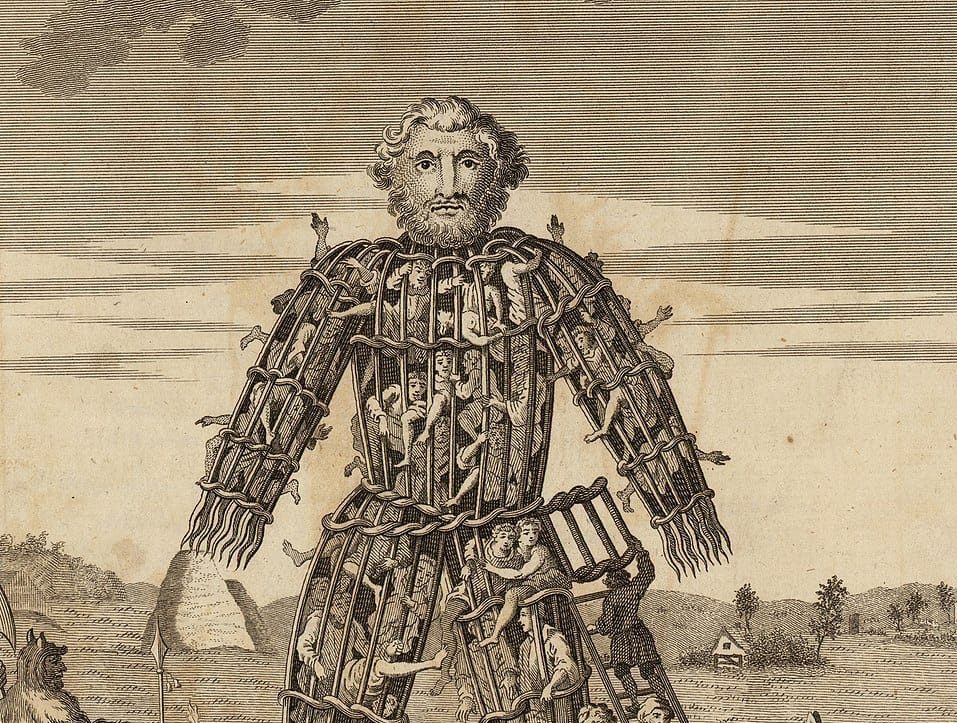
At the height of witchcraft trials and wrongful executions (1500-1660), witch hunters burned (or hanged) innocent women for many reasons. This was during what was called “The Great Hunt.” Witch hunters accused upwards of 80,000 people and they saw to the murder of at least half of them. Consorting with the devil was a major cause of concern for many societies and maintaining the status quo was likewise important. Thus, accusations of deviltry in communities carried with it grave promises and prompted factually-dubious investigations. Yet, accusations were time-consuming and expensive, so not every accusation went to court. But, the rumors of witchcraft certainly existed which was damning enough for the social structure of a village.

Nevertheless, comparing Morgan le Fay in literature to witches, we find parallels to other women of lore and history.

Joan of Ark being one of them.

Witches of History

Joan of Ark and Anne Boleyn

National Geographic states that St. Michael convinced Joan of Ark, a medieval peasant, to fight against the English for the French. In battle, “she helped liberate the city of Orleans, invigorating the French troops’ morale.” However, after the English took her hostage, they burned her at the stake in 1431 for witchcraft.

As some sources stated of accusations, “maleficium” or sorcery, “prompted a wide array of suspicions.” Accusations typically included dying or diseased livestock, blighted crops, aggressive storm, feuds, rivalries, or something political in nature. What is more, Anne Boleyn, the unfortunate wife of Henry VIII, could not provide him with a male child. So, the court found her guilty of “adultery and treason,” and the king saw her beheaded. Later, accused of “being an 11-fingered witch.”

Link to Morgan le Fay

What these women have in common with Morgan le Fay is her power and her place in society. As Mark Twain writes derisively of feudal society and its related ills to the Gilded Age, we also find his wit in comparing le Fay to what used to be sorceresses in the 1500s and 1600s–witches. She is cunning, evil, shrewd, and quick to murder. And she focuses on torture as a means of extracting crucial evidence. When Morgan le Fay needed to become a frontline character in Arthurian legends, she became more malicious, violent, and vengeful. Those practicing witchcraft, too, went from healers to vile vagrants and connivers.

Witches as Devil-Worshipping Healers

Witches as healers predate the long-standing synonymy of witches and the devil–even though modern interpretations are far more feminist and favorable to witchcraft as empowerment. Then, their reputations became blackened by society when it was necessary. Perhaps, the spread of male-dominated religions ruled out “female deities” who had long “Trained in the sacred arts” and “became known as wise women.”

The transformation to devil-worshipper happened to real women just as Morgan le Fay’s transformation happened ot her fictionalized self.

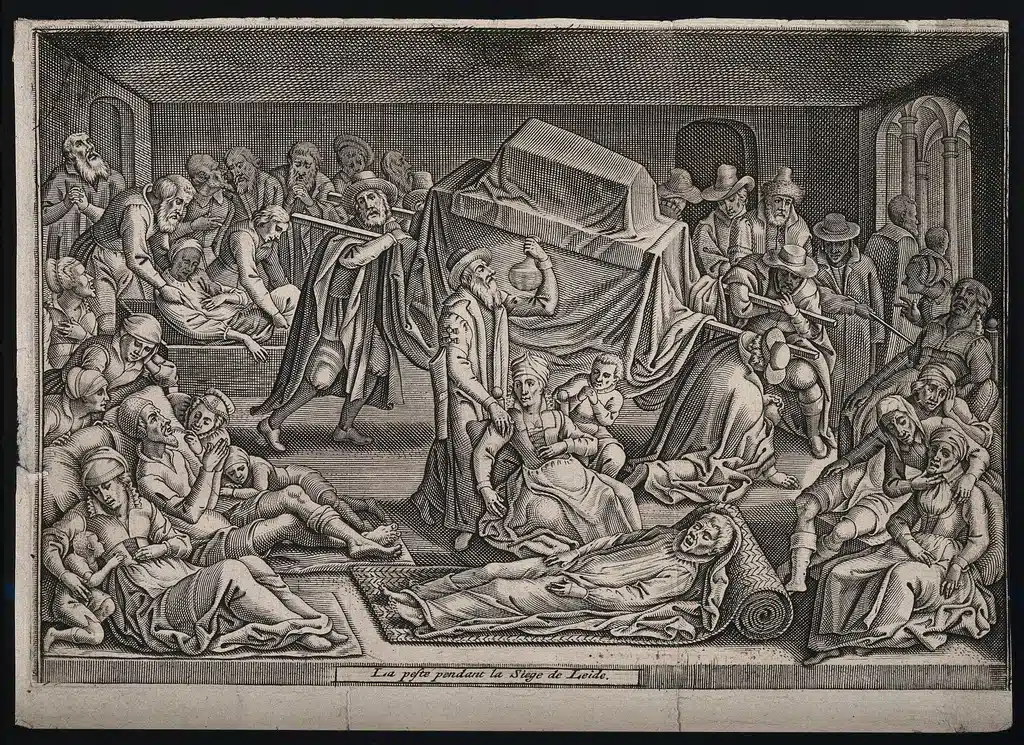
“Centuries later, this fear of witches spread to Europe … when the plauge decimated Europe by killing one in three people … Amid the panic, many attributed their misfortune to the Devil himself–and his suposed worshippers.”

Of course, when hysteria takes off (like The Dancing Plague of 1518 [Choreomania]) it is impossible to stop and the stories keep building, from allegations of late-night rituals, to sacrificing infants, to naked dancing and sexual promiscuity. As it stands, any person with authority would look at torturing and murdering the innocent as the work of a sorceress or witch as well.

Traditional Views of Morgan le Fay

With many interpretations, Morgan le Fay comes off as evil in comparison to her brother King Arthur, and often is the cause of his undoing, as she mothers their incest-child, Mordred. However, in earlier texts, Morgan is actually a helper and healer of Arthur in Avalon (and in one account the ruler of Avalon), where she holds the house and tends to her brother. For instance, Le Fay’s appearance in Monmouth’s Vita Merlini (1148) is as a healer and helper to Arthur.

Later writings, such as the Vulgate Cycle (1215-1235) characterizes her as a malevolent force capable of great black magic which both harms people and hides her true age.

In Morgan le Fay: Origins and Evolution, researcher Andrea Whyland writes that Morgan’s change in the Vulgate Cycle shows that she is no longer a background player, but an active participant of the story. She states: “Morgan now lives in a castle, instead of the Otherworld of Avalon. Her magical powers suddenly became tools used for evil or manipulative purposes. This stands opposed to her history healing which is seen in earlier works. From this point forward, Morgan also plays more of an integral role in the sequence of events.”

Additionally, Morgan becomes a sexual being, attempting to seduce and capture Lancelot on multiple occasions. Her sexuality and penchant for magic aligns her with a certain amount of “witchiness.” This extends beyond the early cycles she appears in and into the 1600s. At this time, where women with power were viewed as evil, harassing hags. As such, in later writings (“Suite du Merlin” and “Sir Gawain and the Green Knight”), Morgan conspires against the heroes from Merlin to Arthur to exact revenge for love lost and to shame the entire Round Table.

Appearance in Popular Culture

In Mark Twain’s A Connecticut Yankee in King Arthur’s Court, Morgan le Fay is a variety of things: she is smart, she is a talker, she is interesting, and she is charismatic.

“She caused us to be seated,” states Hank Morgan, the protagonist, “and then she began, with all manner of pretty graces and graciousnesses, to ask me questions. Dear me, it was like a bird or a flute, or something, talking.” (Twain).

However her reputation preceeds her.

“… for I knew Mrs. le Fay by reputation, and was not expecting anything pleasant,” Hank states. “She was held in awe by the whole realm, for she had made everybody believe she was a great sorceress. All her ways were wicked, all her instincts devilish. she was loaded to the eylids with cold malice.”

And it is shortly after her kind introduction that she reveals herself, her true self, by stabbing a man with a dagger who dared to accidentally touch her. Her duality is almost Elizabeth Bathory-levels of wickedness. A ruler with literal skeletons in her closet.

Conclusion

Le Fay has endured a history of change and manipulation. However, there is one thing that has remained consistent–the spirit of her character as feminine power. Granted, often that power is perceived as evil or overbearing. Yet, by looking at her ability as a sorceress and a healer, readers find a character rife in autonomy and agency. These two qualities are important. The society contemporary to her interpretation may perceive that as evil or untoward, but from modern perspectives, Le Fay has proven resilient and capable of standing up to male-dominated legends of yore.

‘The Island of the Blue Dolphins’ by Scott O’Dell Review

The Newberry Medal winner The Island of the Blue Dolphins by Scott O’Dell is an interesting book. It pits the will of a young girl against many dangers in an isolated setting. The struggle for survival in this text captures an intense narrative about making difficult choices at a young age. Sometimes, young-adult fiction can miss the mark with young people’s lives–and sometimes they can be visceral. Throughout The Island of the Blue Dolphins, we see a coming-of-age story about survival and being at ease with your circumstances.

Summary of the Blue Dolphin

The Island of the Blue Dolphins is about Karana (Won-a-pa-lei), a Nicoleno girl who lives alone on an island off the coast of California. Karan lives alone on the island after her people engage in a battle with Russian fur hunters. Karana takes to her new life by adapting to the island without her community while battling feral dogs. The story revolves around her struggles and her reticence to be rescued.

Back of the Book

From the book: “In the Pacific there is an island that looks like a big fish sunning itself in the sea. Around it, blue dolphins swim, otters play, and sea elephants and sea birds abound. Once, Indians also lived on the island. When they left and sailed to the east, they leave a young girl behind. This is the story of Karana, the Indian girl who lived alone for years on the Island of the Blue Dolphins. Year after year, she watched one season pass into another and waited for a ship to take her away. But while she waited, she kept herself alive by building shelter, making weapons, finding food, and fighting her enemies, the wild dogs. It is not only an unusual adventure of survival, but also a tale of natural beauty and personal discovery.”

Critical Response

Most critics and reviewers praise the novel. It is a Newberry Medal-Winning classic, along with a Hans Christian Andersen Medal. On Goodreads, the novel has 108,363 five-star reviews. Reviewers write that its lessons in survival and readability are beneficial. One reviewer wrote: “Karana’s remarkable story is not to be missed. A story that is enjoyable for adults as it is for older children!”

However, the book also has 10,168 one-star reviews, with reviewers stating that the book relies on stereotypes of Indigenous Americans. Additionally, reviewers have pointed out the “two-dimensional” characters. They also stated that the reader should see far more growth in the main character over 18 years.

Impressions

Negative reviews aside, I had a recent thought about The Catcher in the Rye as a book that I still can not really get behind, even though I read it precisely when I should have read it as a young person. I may be a phony, but I can see how the appeal of this book has waned in the new era of social understanding.

The development of this character over the course of the novel is an important plot construct to note. She seems to be a living, breathing character who is quiet industrious and capable of success. As a coming-of-age story, it shows the reader how somebody from a different background and different view of life and change into somebody capable of surviving on their own. The Island of the Blue Dolphins creates understanding. That is really important for a book.

On the blog, I have looked at a few novels about survival that stand as great testaments to children’s literature. These novels include Hatchet and a few others. I think I will give this book a reread at some point to just take in the multimodal accompaniment that this novel has created, from movies to critical responses in print.

Greek Mythology Origins, Chaos, and Gaea

Where does one start with the origins of Greek Mythology? After all, it can be difficult to understand the difference between myths, legends, and tall tales. Perhaps at the creation of everything is the only place to start. Greek mythology really begins with Gaea and move ahead from there in a linear fashion, a little at a time.

A Prelude to Mythology Origins

If you are new to Greek mythology, all you have to know is a couple of things:

  1. Myths are used to help explain the world. They answer the why question using fantastical elements (magical weapons, monsters, and heroes);
  2. Personification is when we give human characteristics to nonhuman subjects;
  3. Before the start of the world, there was only emptiness and Chaos.

Putting the World Together in Darkness

According to Greek Myth, in the beginning of the world, the vacant void of space existed everywhere. Chaos personified, made of void, mass, and darkness, reigned in this vacuum.

Though, sooner or later, the void began to fill as Gaea emerged from this nothingness. She appeared on her own, created by Chaos, along with her two siblings. Those siblings are Tartarus and Eros, who were the deities of the Underworld and Love, respectively.

More gods were to follow (created by Chaos), including Erebus (Darkness) and Nyx (Night), who together created Aether (Light) and Hemera (Day). Nyx, too, created a family on her own, including: Moros (Fate), the black Ker (Doom), Thanatos (Death), Hypnos (Sleep), Oneiroi (Dreams), Geras (Old Age), Oizus (Pain), Nemesis (Revenge), Eris (Strife), Apate (Deceit), Philotes (Sexual Pleasure), Momos (Blame), and the Hesperides (the Daughters of the Evening).

All the same, Gaea in Greek myth is an important deity. She was “described as the giver of dreams and the nourisher of plants and young children.” In time, she created the universe and Earth as we know it, giving names and gods to the things that shape our world, such as Uranus (the sky), Ourea (the mountains), and Pontus (the sea).

Everything in Greek mythology needed some kind of name or characteristic so that it fit within a narrative. For example, the mountains are not just rocks, but a character named Ourea. They are the child of the primordial progeny of Gaea. Now, being personified, we as listeners or storytellers can learn something about the world, and, more specifically, about the mountains.

On Greek Mythology and Personification

It is important to note, and as mentioned, that Greek Myth focuses on personifying elements and objects to give life to their stories. After all, the Earth is quite a character, and tying that into something like the creation myths of a culture is important work. Gaea can get into trouble, or it can be a seething tempest that is up to hear with its husband. By creating these personified character, the Greeks were able to not only share wonderful stories, but they could also explain their world. Gaea, though factoring heavily into a creation story, gives life and purpose to the Greek people.

Conclusion

Gods take on many different forms in the origins of Greek mythology. They can either be humans or simply forms with names ascribed to them. This is an important fact to understand. For the Greeks, all things in the world needed some kind of personification to answer that why question.

Psycho by Robert Bloch: Understanding Inspiration

Author Robert Bloch was an important writer in the history of the horror genre. He is also somebody who contributed a great deal to multiple formats of writing—short stories, screenplays, etc. Psycho (1959) by Robert Bloch, is a mainstay of the horror genre and has spawned multiple movies and television shows.  By examining this landmark novel and its source of inspiration, writers can see the true nature of inspiration.

‘Psycho’ by Robert Bloch Summary

Psycho details the story of Norman Bates, who is a caretaker at an off-the-beaten-path motel in Fairvale. His mother dominates his life, who refuses to let the young man out of her peremptory grip. They argue about the failing motel, whose business has been recently rundown by the relocation of a nearby highway. 

After his mother murders Mary, a woman who is on the run for stealing cash from her real estate client, Norman disposes of the body. Afterward, he continues caring for the motel…and its aging matron. After the woman’s sister, Lila, Marion’s ex-boyfriend, Sam, and a private investigator, Arbogast, come looking for the now deceased woman, Norman’s mother strikes again. This time, she kills Arbogast with a razor while the former two are out investigating. 

After further inquiry by Lila and Sam, some revelations occur. First, Norman’s mother has been dead for years, and Norman spent time in a mental institution. Second, Lila finds the corpse of Ms. Bates in the fruit cellar, Norman attacks her. Horrifyingly, he is is wearing his mother’s clothes. Luckily, Sam stops Norman. The explanation given is that Norman turned into his mother after a bout of matricide in which he poisoned her and her lover out of jealous rage. Confined to a mental institution for life, Norman psychologically transforms into his mother. There, he deigns to prove that he wouldn’t dare even hurt a fly. 

How Inspiration Informs Our Novels

The Gein Inspiration

Inspiration can be a tricky thing to conjure. You may have to be in the exact right mood. Or, maybe you have to be lying in bed in the morning, or maybe you have to be taking a shower…or perhaps you are just out mowing your lawn. Regardless, inspiration will come smack you right in the head with a great idea. 

Whatever it is that works for you, works for you. 

The story of Ed Gein inspired the story behind Psycho (1959) by Robert Bloch. Gein also has a relationship with multiple personality disorder and murder. For instance, he had murdered two women and set himself about crafting a skin suit after his own mother’s heart. In this case, inspiration came from real-life scenarios. Additionally, it comes with some past stories of Bloch’s earlier works that also dealt with multiple personalities and grim situations.

As written by Galaxy Press: “In this regard, Robert Bloch’s protagonist, Norman Bates, was much like Gein. Bloch realized, ‘I’d discovered how closely the imaginary character I’d created resembled the real Ed Gein both in overt act and apparent motivation’.”

Bloch wrote Psycho over a six-year span in Weyauwega, Wisconsin. As Bloch later stated, he based Psycho on a “situation rather than any person, living or dead…” 

As Shane Nyman writes in an article for Post Crescent: “Living only about a 35-minute drive from Plainfield, the already-accomplished Bloch read about the discoveries at the Gein family farm when it hit the papers in 1957. Two years later, the world was introduced to Norman Bates.”

Bloch’s Version of the Story

And, yet, Bloch also disputes the claims of his immediate knowledge of the incident. He wrote in his 1993 memoir that he knew “very little” of Gein at the time of his writing, only realizing the connection years later when writing an essay about Gein. He soon realized that there were lots of similarities between his novel and the case. 

I think, in this way, inspiration was a sort of parallel thinking in the ether. It was the right time and place for the story to happen, and so was the Gein case. It’s horrible to think, but lots of murders occur and books are written at the same time. Some of them build traction with the public and some don’t build traction at all. It’s an Overton Window of sorts where whatever is happening in the zeitgeist propels a story to success. Yet, two sources of inspiration can happen in tandem. 

Conclusion

Regardless of how you are inspired—whether by true crime events now or later—inspiration can bring forth interests that we already have and allow them to proliferate on the page. Bloch loved true crime, such as Jack the Ripper and Lizzie Borden, so it makes sense that inspiration came to Robert Bloch for Psycho in the form of his interests. 

He was also devoted to strange fiction and tales of the macabre, which even featured his mentor’s death:

The Library of America states that: “One of the stories Bloch wrote while (H.P.) Lovecraft was alive featured Lovecraft as a character, killed by a monster. Weird Tales required Bloch to get the victim’s permission before publishing the story, and Lovecraft authorized Bloch ‘to portray, murder, annihilate, disintegrate, transfigure, metamorphose, or otherwise manhandle the undersigned in the tale entitled THE SHAMBLER FROM THE STARS’.”

In so many words, find your inspiration where your love is at, whether that be stories like Psycho by Robert Bloch about killers in the Midwest, or stories where you yourself are doing the killing.  

Greek Myth: Uranus, a Monster Who Created Monsters

As mentioned in a previous post, Greek mythology is a complicated web of characters birthed by multiple deities. The birth of Uranus (son of Gaea) in Greek Myth also has his own part in creating monsters, both figuratively and literally. In examining his birth and rise to power, we can see how he created the more modern understanding of warring gods who fight for control of mortal fate and destiny.

The Creation of a Greek Myth Tyrant

In Greek Myth, Uranus (also known as Ouranos) was born from Gaea. The lady of Earth grew lonely and wanted company and birthed him on her own. Afterward, Uranus ruled the sky (or the Heavens), and his siblings ruled the mountains (Ourea) and the sea (Pontus). Uranus successfully wielded this domain expertly, too, as it was from Uranus’s lungs that we have the air with breathe. He contributed monumentally to the construction of Earth’s livable habitat. Thus, it stands to reasons that Uranus was the all powerful deity of Earth, and its first ruler.

It was not long before Uranus slept with Gaea and began to make children–of which they had many. These included the three Cyclopes, six daughters (Theia, Rhea, Themis, Mnemosyne, Phoebe, and Tethys), and six sons (Oceanus, Coeus, Cius, Hyperion, Iapetus, and Cronus). The latter two-thirds would make up the Titans (Britannica). Moreover, and for future reference, having copious amounts of children was a through line for Greek mythology.

Overthrowing the Primordial God

Now remember, we have personified characters here, so both Uranus and Gaea are the Heavens and the Earth and they are making children. However, Uranus didn’t want children for one reason or another so he stashed them away inside of Gaea’s (or Earth’s) body. Uranus’s actions made Gaea bitter, and so she plotted to repeal her husband’s actions by convincing her children to revolt against him. However, all of her children were afraid of Uranus’s power; well, all except for one–Cronus.

After crafting an adamite scythe (or a scimitar in some stories), Gaea gave it to Cronus and told him to hide in wait for his father who would come to lay with her. And, indeed, Uranus was a randy god and came to lay with Gaea. At this point, Cronus emerged from his hiding place in his mother’s womb, and he used the scythe to castrate his father.

Remember, too, as with all stories, Greek mythology has been told differently through the years. For example, another retelling features more than just Cronus getting involved with castrating Uranus, and the details are as follows:

“Four of these (sons) positioned themselves at the corners of the world, ready to grasp their father as he descended to lie with Earth, while the fifth, Kronos (Cronus), took his place in the centre and there castrated Ouranos with an adamantine sickle.”

Uranus, meanwhile, either died or fled, but not before the spurt of blood from his wound further impregnated Gaea with the “avenging” Furies, the Giants, and the Meliai; and, “avenging” is right because Uranus’s overthrow creates the beginnings of war that would continue through much of Greek mythology.

Conclusion

Uranus wasn’t a good guy, but he did do a lot to create the world. Though, we can see in our story about Uranus that there is a lot to learn about the world and about ourselves.

Number one, we have a lesson on the creation of our planet and how the air we breathe and the Heavens above came into creation. Number two, we have a lesson about taking care of your children lest you create bitter hatred in your family, which might also be a lesson about caring for those around you.

Lastly, and as we will see in future posts, Uranus’s actions bleed into other characteristics found in his children (Cronus for sure), and the Furies, and the Cyclopes.

A River Runs Through It and the Stories They Tell

“Eventually, all things merge into one, and a river runs through it,” writes Norman Maclean in A River Runs through it and Other Stories. “The river was cut by the world’s great flood and runs over rocks from the basement of time. On some of the rocks are timeless raindrops. Under the rocks are the words, and some of the words are theirs. I am haunted by waters.”

I like taking walks in the city I live, and I also like taking photos of the river that runs near my house. The river is an interesting place to watch, because of the birds and the other animals, but there is also a lot going on there depending on the time of year. A lot of boats in the summer. Shanties in the winter. Leaves on the breaks in the fall.

There are stories there.

The Waters and Their Stories

Whether the waters are haunting or not doesn’t matter too much to me, because there lots of other stories to tell. Most of them don’t involve the early death of one’s sibling or the fear of drowning when rafting the rough currents. Similarly, the stories get me thinking and that’s a good way to spend an evening or a morning. It’s especially true if you are trying to make sense of one that’s tricky.  

In Robert Louis Stevenson’s poem “Looking-Glass River” he states: “Smooth it glides upon its travel / Here a wimple, there a gleam– / O the clean gravel! / O the smooth stream!”

What this means is, I can’t speak for the clean gravel in my neck of the woods, but I believe I’ve seen a wimple and gleam here and there as I follow the shore on either side. Often, I’m silently confronted by early risers out for their morning strolls or nightwalkers seeking the evening calm.

“I do not know much about gods; but I think that the river / Is a strong brown god—sullen, untamed and intractable,” wrote T.S. Eliot in The Four Quartets. “The river is within us, the sea is all about us; / The sea is the land’s edge also, the granite / Into which it reaches, the beaches where it tosses.”

Spirituality and the Waters

The divinity placed upon water itself is apparent in much religious writing. It is a cathartic and purifying method of being born anew. Water has been of critical importance to both maritime law and commerce for ages, importing and exporting food and famine, war and peace. It has also been a source of wonder and musings about existence.

In “The River,” Ralph Waldo Emerson penned:

And I behold once more

My old familiar haunts; here the blue river,

The same blue wonder that my infant eye

Admired, sage doubting whence the traveller came,—

Whence brought his sunny bubbles ere he washed

The fragrant flag-roots in my father’s fields,

And where thereafter in the world he went.”

The words Emerson chooses, including “Admired” and “sage” dignify the waters in a way that create a spiritual understanding. Additionally, blue wonder and blue river speak to the calming feeling that water imparts to humanity. According to Emerson, the waters are something to truly behold.

Conclusion

Mostly, we don’t know where the river’s been or where it goes, because we can look at it and think about the images it conjures in our animal brains; but, mostly, walking by the water gives me piece of mind. Yet, there are many things to see and there are many things to think about.

I am about both sometimes.

Why Writing Simply for Clearer Meaning is Important

Often, beginning writers write long, winding sentences that lose track of their meaning. Typically, this happens because novice writers have a lot to prove, and simply do too much. What budding writers forget is that writing simply for clearer meaning is important. Writing simply is an important function of writing because it shows that the writer has a direct command of language. In this way, they are able to say more with less. It is okay to write big, long sentences with lots of punctuation and conjunctions from time to time. Yet, it is an entirely other thing to write simple, direct sentences that pack a lot of meaning.

How Can Writers Write Simply for Clearer Meaning

To start, a simple sentence has a subject and a predicate, and this also makes it an independent clause. Both terms are interchangeable: simple sentence = independent clause.

A sentence is independent because it can stand on its own. So that also implies that a simple sentence should start with a subject and end with that subject doing something. After all, a simple sentence is a subject and a predicate. Therefore, simple sentences are very direct.

Henry played his guitar loudly. The flurry of music filled his head and he smiled.

The above sentences are simple but tell a great deal. We learn about Henry, that he is a musician, and that he loves music. He is probably very good at playing guitar, too, because the writer used the words “flurry” and his appreciation of this is apparent. In this instance, simple sentences help writers write clearly, stay on track, and convey meaning.

Let’s look at an excellent example of writing simply from Ernest Hemingway’s In Our Time:

“They shot the six cabinet ministers at half-past six in the morning against the wall of a hospital. There were pools of water in the courtyard. There were wet dead leaves on the paving of the courtyard. It rained hard. All the shutters of the hospital were nailed shut. One of the ministers was sick with typhoid. Two soldiers carried him downstairs and out into the rain. They tried to hold him up against the wall but he sat down in a puddle of water. The other five stood very quietly against the wall. Finally the officer told the soldiers it was no good trying to make him stand up. When they fired the first volley he was sitting down in the water with his head on his knees.”

I believe this passage is perfectly simple, and it tells the audience exactly what the need to know. Of course, if you were a writer who focuses on more flowery passages, this excerpt could be made into something more purple. Hemingway wrote in a very straightforward manner (perhaps too straightforward according to some). So, here is a reedit connecting some of the simplicity while still maintaining its thrust and meaning:

“They shot the six cabinet ministers at half-past six in the morning against the wall of a hospital. There were pools of water in the courtyard, and there were wet dead leaves on the pavement. It rained hard. All the shutters of the hospital were nailed closed, and one of the ministers was sick with typhoid. Two soldiers carried him downstairs and out into the rain. They tried to hold him up against the wall, but he sat down in a puddle of water. The other five stood very quietly, and, finally, the officer told the soldiers it was no good trying to make him stand up. When they fired the first volley he was sitting down in the water with his head on his knees.”

Both passages are simple enough. One is very Hemingway, while the other connects the ideas and avoids repetition. The first is the author’s voice, while the second is creating greater flow between ideas. Both work, and both are simple in construction. They both convey the same meaning.

Verbosity and Grandiloquence

There are writers that use long, complicated words to create mood and to set the tone of writing, and that is totally fine. Those writers are conveying different moods and tones through their use of syntax. However, those writers (Joyce Carol Oats, Flannery O’Connor, Charles Dickens, etc.) have had a great deal of experience writing. And, practically speaking, as a budding writer, the focus on simplicity should be paramount. In other words, writing simply for clearer meaning should be crucial for a beginning writer.

One thing a writer learns eventually is that a thesaurus is not necessary to be a good writer; though, they do come in handy. Yet, one’s eye is much more clear than the ocular device on one’s head, if that makes sense. Thus, grandiloquence is also not necessary for a writer to make a clear statement. Similarly, a large amount of words for wordiness’ sake is just wasting somebody’s time. Oscar Wilde’s The Picture of Dorian Grey is a great example of this verbose idea. Wilde loved words and using lots of different, complicated, ones to convey meaning.

Conclusion

What needs to be said is this: a beginning writer needs to cut down the length of their sentences and their word count in order to discover what is essential. In this way, the writer can see the simple message of their story or essay. Writing simply for clearer meaning allows the writer the freedom to evolve. From a simple passage, they can continue honing the story itself or begin to add more flowery passages while connecting ideas with more creativity and clarity.