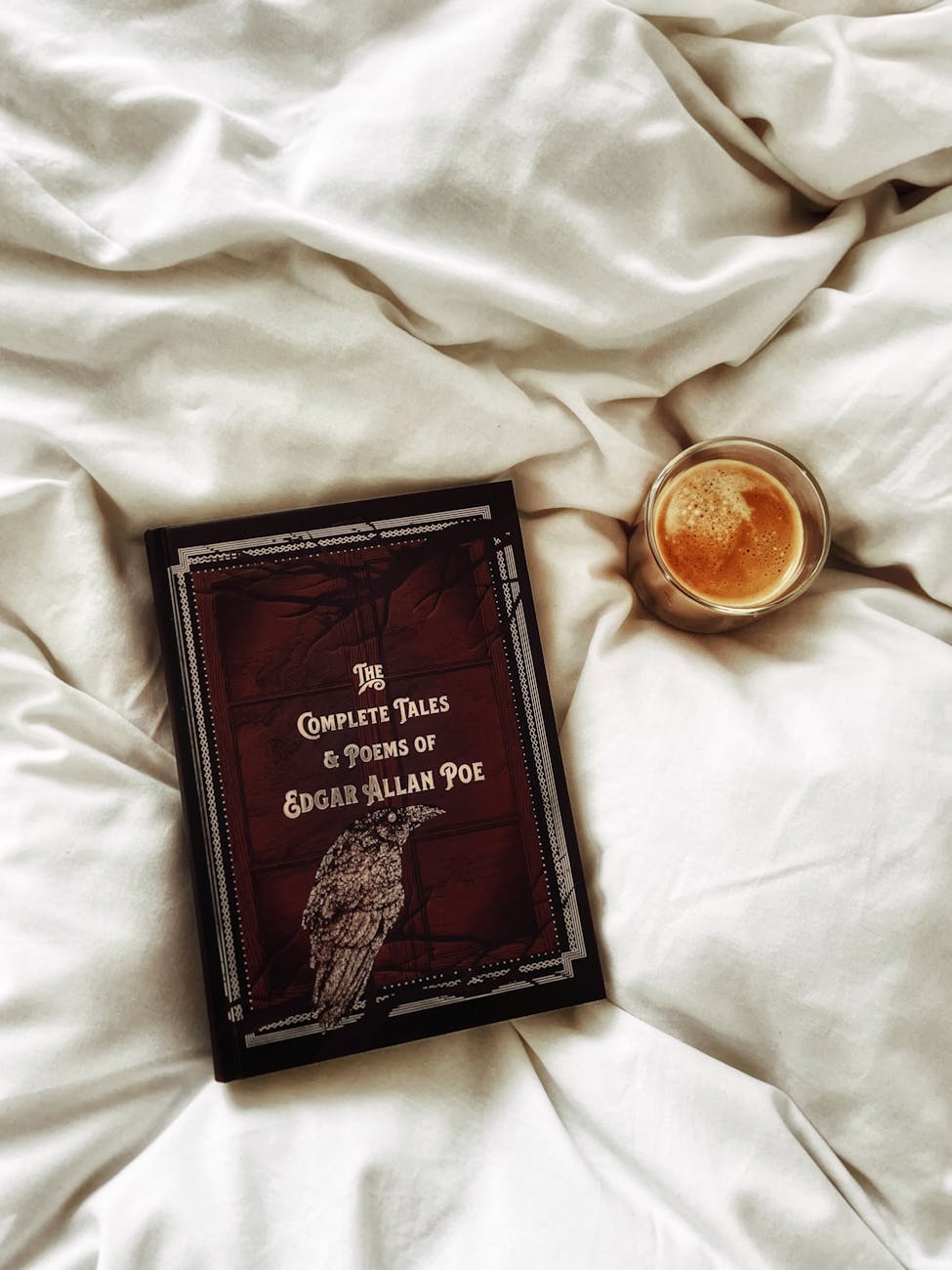
In the realm of literature, few genres speak to the same sense of excitement as a horror story. The mystery, suspense, and eerie stories will always fascinate readers. Thus, exploring different types of ghost stories (and ghosts in general) helps writers understand their own approach to this genre. In this post, we will look at how to write a ghost story to weave our own spooky tales.
Writing Ghost Stories with Ghostly Character Development
Character development in ghost stories is important. In learning how to write a ghost story, we also have to learn about motivations. The following examples should help us familiarize ourselves with this idea.
A Christmas Carol
To begin, character development is one of the most essential parts of a ghost story. For example, the transformation of Ebenezer Scrooge throughout A Christmas Carol shows the power of well-crafted characters. His movement from a monstrous anomaly of capitalism to an equitable seraph shows the power of character development. It also shows how it can move a story both plot-wise and thematically. In addition, Scrooge’s character helps us understand the story and the motive of the plot. As readers, we can see the plot unfold through the miserly old crook’s experiences. Then, suddenly, he is not such a miserly old crook anymore.
The Tell-Tale Heart
Furthermore, we can see more nuanced character development in the ghost story. For example, in Edgar Allan Poe’s “The Tell-Tale Heart” the lead character is haunted by the murder of the old man with the milky eye. His hysterics over this violence causes him to reveal himself to the police. In examining this, we can see him as a paranoid, psychologically disturbed individual in the beginning of the story. What is more, Poe’s narrator, consumed by guilt, becomes a spectral presence in his own right, offering a different dimension to character-driven ghostly tales. Poe skillfully crafts a character whose internal turmoil becomes an essential part of the ghostly narrative, emphasizing the profound impact of psychological depth on the eerie atmosphere. By the end, he is a full on homicidal maniac.
The Turn of the Screw
Similarly, the governess in Henry James’ “The Turn of the Screw” changes from both a caring, loving caretaker of the children to somebody equally paranoid and lost in her own psychosis by the end. Likewise, the ambiguity of The Turn of the Screw creates a different take on ghosts and the ghost story. In this, the reader has to question the reliability of the narrator. This ambiguity prompts readers to question the characters’ motives. They also question the very fabric of reality within the ghost story. This illustrates how characters can be a nuanced and pivotal in shaping the overall eeriness of the narrative landscape.
Ghost Settings in Craft
The setting is not merely a backdrop in a ghost story. It is also a living, breathing entity in the story. If you consider the locations and the places where the story takes place, all you must do is reach a little further and examine both the real and the metaphorical aspects of the setting. Both of these details help the reader feel as though they are in an environment that is alive.
For instance, Dickens masterfully transports readers to the cold, desolate streets of Victorian London in A Christmas Carol. This brings more sensory experience to the tale’s haunting quality. The reader can see the ghostly plumes of nearby factories. They can also hear the hollow coughs coming from destitute children on the street corner. The click and clack of Scrooge’s cane on the sidewalk is another added detail.
Additionally, when considering Poe’s “The Tell-Tale Heart,” the confinement of the small home creates a claustrophobic environment. James’s The Turn of the Screw has an equally claustrophobic environment in Blythe Manor. This is where the governess cares for the children. Eventually, every turn leads down the rabbit hole of ghostly encounters.
How to Write a Ghost Story with Suspense and Themes
Moreover, a successful ghost story should not just rely on spectral encounters but explore deeper, richer themes. Dickens seamlessly weaves social commentary into A Christmas Carol, addressing themes of greed, redemption, and the role of the rich and powerful in benefitting society. Meanwhile, Poe’s “The Tell-Tale Heart” examines how mania can transform somebody from simple paranoia to a murderous vulture, praying on the weak and vulnerable. In addition to that, Henry James’s The Turn of the Screw explores an unreliable narrator and ideas of “the truth” in context. These themes allow a deeper exploration of the work and ties many of the story threads together.
Conclusion
In learning how to write a compelling ghost story expects an execution of skill in the horror genre. There should be character depth, atmospheric setting, thematic richness, and effective pacing. In looking at similar writings, such as A Christmas Carol, and The Turn of the Screw, writers can use these mentor texts to guide them through writing.
As it relates to your own writing, thematic knowledge and research may be the most beneficial. Horror authors look into the hearts of humanity and pull out the taboo. A murder spree in the Bahamas has a juxtaposition at play. Meanwhile, a love story in a Gothic castle presents a new twist on an old genre. The most important thing with a good ghost story is to keep it interesting, even if it is a slow pot-boiler, or a fast-paced murder mystery. Give the reader something to grab onto, so they don’t get left behind.
Other ghost stories that can help guide you in your own writing:
- The Haunting of Hill House by Shirley Jackson
- The Shining by Stephen King
- Ghost Story by Peter Straub
- The Canterville Ghost by Oscar Wilde
- The Lovely Bones by Alice Sebold
Works Cited
Dickens, Charles. “A Christmas Carol.” Project Gutenberg, 2008, http://www.gutenberg.org/cache/epub/24022/pg24022-images.html.
Poe, Edgar Allan. “The Tell-Tale Heart.” Project Gutenberg, 2008, http://www.gutenberg.org/ebooks/2148.
James, Henry. “The Turn of the Screw.” Project Gutenberg, 2014, http://www.gutenberg.org/ebooks/209.






Leave a reply to satyam rastogi Cancel reply