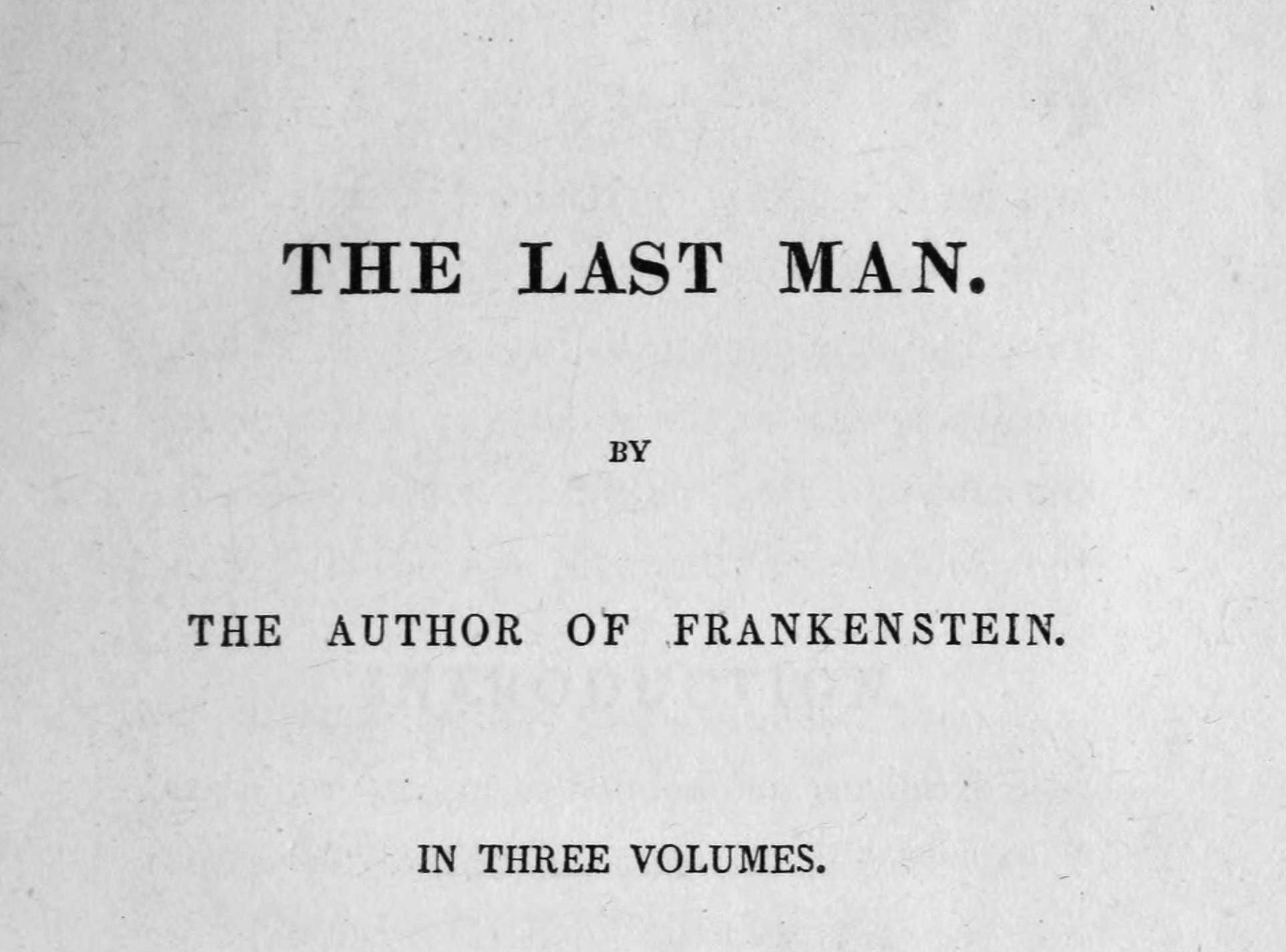
Mary Shelley has an impression on this blog, as her most famous work is easily referential. That is to say, the convenience of referencing Frankenstein: Modern Prometheus as an exemplar for gothic-horror novels is practical. However, throughout her career, Shelley published more novels that stayed within the same science fiction/grounded-in-realism genre. In the The Last Man buy Mary Shelley, the author explores these themes once again.
Summary of The Last Man by Mary Shelley
Shelley’s The Last Man tells the story of Lionel Verney. Lionel is an orphan and works as a shepherd. and his friends and family. After meeting Adrian, the former prince of England, Lionel encounters a wider world of knowledge and intellect. After the return of a war hero, Raymond, and the marriage of Lionel’s sister, Perdita, to the former, the story ramps up.
Raymond is killed in an explosion in the plague-ridden city of Constantinople. In response to this, Perdita flings herself from the homeward vessel and drowns herself at sea. No doubt from a broken heart. Afterward, a plague breaks out, and the survivors tread through an apocalyptic England until only Lionel remains. The novel explores the themes of love, loss, and survival.
Book blurb
From the back of the book: “Her 1826 novel, The Last Man, reflects Shelley’s fears about civilization and the shortcomings of human behavior. The narrarator discovers a prophetic manuscript, written in 2100 by the last survivor of the twenty-first century apocalyps, which recounts how a deadly plague spread throughout Europe and the world. The scribe, Lionel Verney, describes a world that is both fantasy, and a reflection of Shelley’s reality. She used this novel to scrutinize the machinations of politics and philosophy, and reflect upon pitfalls of human behavior—selfishness, brutality, pride—that she saw in the world around her” (Shelley).
Critical Response to The Last Man
Reception to the book is either ecstatic or (hyper) critical. On Goodreads, it has a rating of 3.36 with a majority of readers giving the book three stars out of five. Some reviewers have pointed out the timeliness of the novel in the wake of the pandemic. Likewise, others have pointed out the “poetic” prose and execution of the story itself. Less favorable reviews have critiqued the pacing and likened the book to reading a “telephone book” and finding the experience disappointing.
Impressions
I like Mary Shelley’s ideas, but I am not a huge fan of her writing. I find that she suffers from Gothic-fever in the worst way. Slow builds are nice, but so are evenly paced stories with exciting climaxes. Bram Stoker’s Dracula has an interesting form (epistolary), excellent build, and a third act that explodes the slow-burn novel. Yet, not all writers approach the genre the same, but The Last Man by Mary Shelley shows the adroitness and technique of the writer. Nonetheless, this story intrigues me, which is why I have a copy.
Works Cited
Shelley, Mary. The Last Man. Digireads Publishing. March 24, 2020. Print.

Leave a Reply