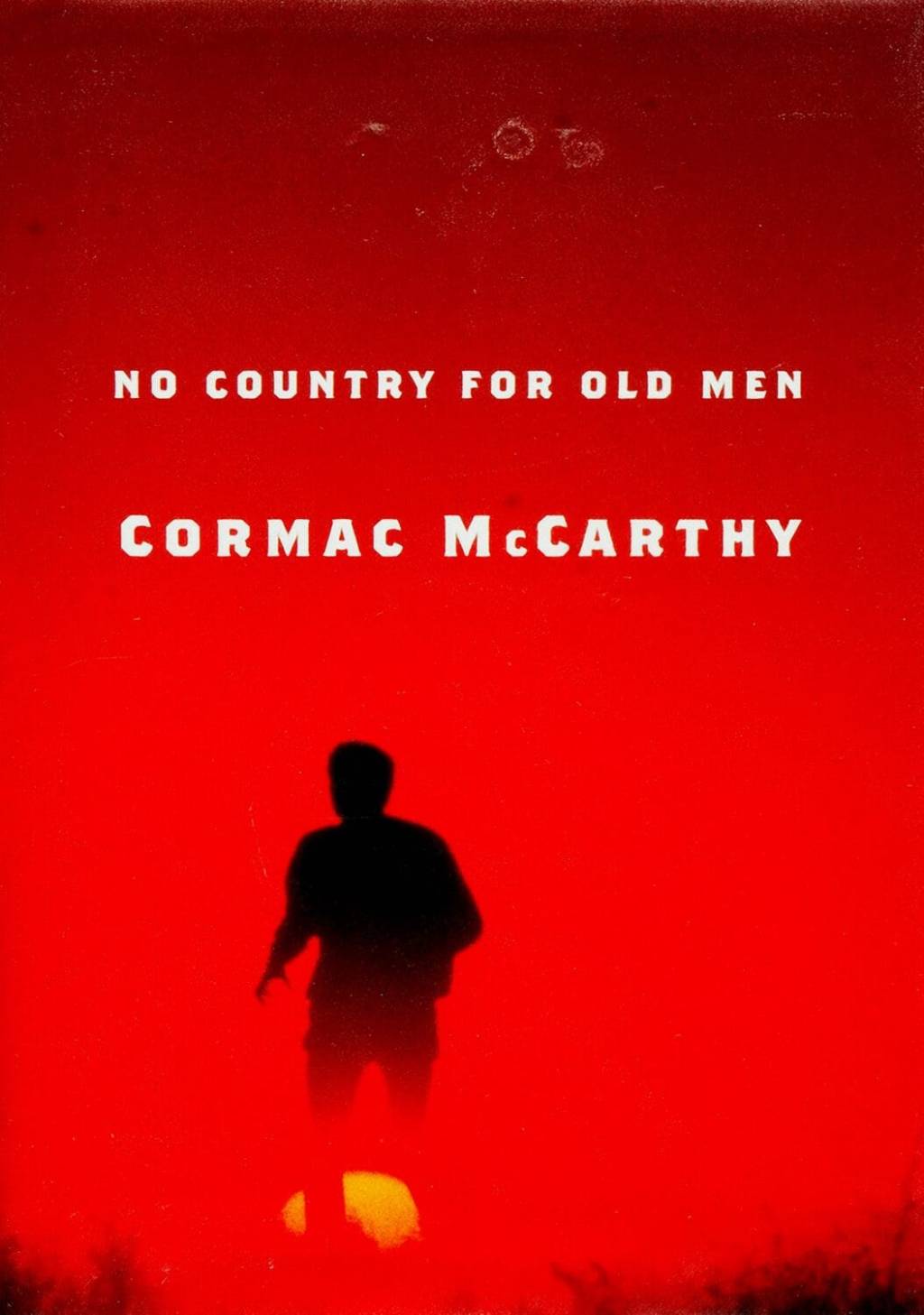
Many readers became aware of Cormac McCarthy’s No Country for Old Men through the 2007 Coen Brothers film. It is a challenging movie in many regards. It has an unconventional ending, strange characters, and an odd plot. Yet, it successfully utilizes conventions of the western genre and creates endlessly analytical moments. The book does this in the exact same way. But, perhaps the most important part of the novel is its meaning, which is difficult to parse. In this post, I am going to offer an analysis of No Country for Old Men and try to explain its significance. In this way, you may be able to view the film with fresh eyes.
Outdated Characters in the Modern World
A Thematic View
I suppose a good starting point is the book thematically as a whole. The book reveals that the city of life informs its residents that death comes swiftly and abruptly. In many respects, so does the slow deterioration of one’s moral self. While I think nailing down a theme for No Country for Old Men can be difficult, there are some clues.
Reviewer Walter Kern writes that the novel relies on sparse elements that create a cohesive whole. This new whole has too much “temptation,” and a lack of “wisdom.” It has, “weak, bad men,” and a lack of, “strong, good ones.”
Yet, it’s conveying something else. Kern writes that it’s freedom and space to make poor choices to temporarily flee. The reader sees this with Moss running for his life with the drug money—the blood money.
“He sat there looking at it and then he closed the flap and sat with his head down,” McCarthy writes of Moss’s fateful decision. “His whole life was sitting there in front of him. Day after day from dawn till dark until he was dead.”
Fate and Chance
Thus, for me, the theme is tied to fate and chance. One’s actions will see literal outcomes. However, I also think an important theme to consider plays into the title. Time moves on whether one wants it to or not. Thus, people become outdated in their morality, philosophy, and ethics as the years pass. In other words, relevancy is not permanent. It can be inferred that one’s age dictates the currency of one’s life. With that being said, the looming irrelevancy of all of our lives encourages the meaning we derive from ourselves and our history.
Let’s analyze a few of the characters.
Sheriff Ed Tom Bell
Responsibility in an Irresponsible World
Sheriff Ed Tom Bell believes people should be responsible for their actions and for their justifications. Yet, this concept evolves throughout the novel as it attaches to each character in similar ways. For the sheriff, the endless procession of horrors jostles him to the point that he retires. At this point, he is disenfranchised due to his inability to exact any kind of justice in a bygone world.
“A few years ago and it wasn’t that many neither I was goin out one of these little two lane blacktop roads of a night and I come up on a pickup truck … so I hit the lights and whenever I done that I seen the slider window in the back of the cab open and here come somebody passin a shotgun out the window.”
During this scene, drug runners attack Bell. They shoot at him from their truck, and he crashes his car and realizes that times have changed. No longer is the world full of innocent barfights that lead to a few minor scrapes. Now it has morphed into a landscape rife with murderous rampages, violence, and killing. While he reminisces about future events, the real change isn’t apparent until the reader is let into two different scenes. One in which he visits Moss’s dad and one in which he discusses his dreams with his wife.
Modern Morality
In meeting with his Uncle Ellis, Bell learns a few things. One is about modern morality and ethics, as “better times” might have never existed. According to Uncle Ellis, men have always killed each other for the same reasons—or lack thereof. As Uncle Ellis states of Uncle Mac’s death, the violent times have never left the area.
“They was seven or eight of them come to the house,” Uncle Ellis tells Sheriff Bell. “Wantin this and wantin that. He (Uncle Mac) went back in the house and come out with a shotgun but they was way ahead of him and they shot him down in his doorway. She (his wife) run out and tried to stop the bleedin. Tried to get him back in the house. Said he kept tryin to get hold of the shotgun again. They just set there on their horses. Finally left.”
Bell is an honest, stalwart sheriff who oversees his county as best he can. Nevertheless, he can’t simply do enough anymore because the world has moved on. At the end of the book, he sees seeking justice as a trivial matter. Evil has forced its hand, the villain got away, and good people died. This is an interesting character progression. Bell reminisces about “better times” where kids used to play different games. Now, it’s too much violence. We see the theme of an evolving world taking place within the story of the book.
Llewelyn Moss
Values Gone Dry
The outdated sense of character and values can be seen in Llewelyn Moss. While hunting on the flats of New Mexico, he stumbles upon drug money, which he then decides to take in order to better his own life and those around him (maybe). This action dooms him, as he is then pursued from the start of the novel and to the finish by ruthless criminals, and he is finally left dead in the doorway of a motel after a shootout with cartel members.
“He (Bell) pulled back the sheet. Bell walked around the end of the table. There was no chock under Moss’s neck and his head was turned to the side. One eye partly opened. He looked like a badman on a slab. They’d sponged the blood off of him but there were holes in his face and his teeth were shot out.”
Morals Aren’t Permanent
In this, we can see Kern’s point—Moss had the freedom of choice and the freedom to flee, but we must also analyze the “outdated values” argument. Moss is impulsive and is willing follow his morality and ethics to the end to justify his theft. Moreover, he is willing to throw his life away, and he believes that, through simple ingenuity, he could survive and defeat the odds. But, as we see, this is not the case. Moss is killed, the money is gone, and his wife, Carla Jean, is murdered likewise.
Llewelyn’s outdated morals—honed in Vietnam—ultimately cause his death. He is too reliant on the skills he hopes to use to defeat the cartel and Chigurh. As such, his morals are outdated and thus lack rational logic (logic that fits into a modern world), which in McCarthy’s world, means you will leave either defeated or you will die. There is no winning.
Anton Chigurh
A Life By Chance
Anton Chigurh is vastly different from both Llewelyn and Bell in his moral code. He doesn’t believe that life has inherent meaning, and instead favors fate as the guiding principal. One follows a path that leads them to where they are going and they do not choose this path either.
“He’s a strict, conscientious, self-taught psychopath who vigilantly maintains his mental ill-health,” Kern writes. “He’s purged himself of all qualms and second thoughts so as to function smoothly in the world that Bell has grown unfit for.”
The march of time and “outdated morals” do not apply to Chigurh because his morality and ethical purity are made for a violent world. In other words, he lives strictly by his convictions, and he will not be deterred unless he is in an absolute dire strait, which isn’t often.
The Differences Show
As such, he is completely different from Bell in that way.
“… what makes Chigurh such a chilling antagonist is that by McCarthy’s reckoning, he seems like the right man for the times—an uncaring beast with no concern for anyone else,” Keith Phipps from the A.V. Club writes.
Llewelyn Moss is flawed, impulsive, and impractical, while Sheriff Bell is in over his head as times have moved on without him, but the world seems to reward people like Chigurh due to his convictions. Somebody who has no want of sensibility, community, and capital—those things that tie Bell and Moss together—will benefit them in the end…or, at least, that seems to be McCarthy’s suggestion.
Conclusion
Living with Outdated Morals
One of the final scenes in No Country for Old Men makes me think that the point of the novel is to touch on the theme of outdated morality. Anton Chigurh is driving his truck down the road after killing Carla Jean and is t-boned by another car that runs a stop sign. He is left in bad shape but is able to pay a bystander for their shirt and silence. Then he takes off into the backroads and byways of America, as though he is some mysterious, unkillable phantom of vengeance and retribution.
Taking a step back, one can see how Chigurh simply leaves the scene of the accident. In this way, he gets away, which literally means that there really is No Country for Old Men because the villain escapes without comeuppance. However, in applying the “outdated morals” concept, we must reflect on Chigurh’s confrontation with hitman Carson Wells. In this, we see his unwillingness to take money in exchange for Wells’ life. In fact, he kills Wells instead of taking his money. However, this should be odd to the reader because we then see Chigurh bribe two small children in order to ensure his own escape. Could it be that he is just a pragmatist who is cleaning up loose ends? I think not.
A Passing of Morality
As the two boys ride their bikes to Chigurh, he asks them for their help and gives them money.
“Chigurh thumbed a bill out of the clip and put the clip back in his pocket and took the bill from between his teeth and got to his feet and held it out…Take it. Take it and you don’t know what I looked like. You hear?”
But, why? If he is so sure of fate, wouldn’t it work itself out? In the novel, Wells asks Chigurh if he would take money in exchange for sparing his life, and Chigurh says it’s a good payday, but “It’s just in the wrong currency.” Nonetheless, according to Jack’s Movie Reviews about Chigurh’s own appreciation of bribery: “As he passes the one-hundred-dollar bill to them (the kids), it is a passing of generations. It is him being weak. It’s him becoming an old man. And, as we know, this is no country for old men.”
The Message Overall
In conducting this analysis of No Country for Old Men, there is no right or wrong. There are just those who have outdated morals or ethical impurity and suffer from their own actions and those who adhere strictly to a moral compass that ensures ethical behavior. Bell realizes he is outdated and is no longer fit for the modern world. Once, he used to break up barfights. Now, drug dealers shoot at him, and he follows a destructive swath cut by Anton Chigurh. The world has shifted to something violently unrecognizable.
Overall, I think I would propose that this book is about changing times and how that has a lessening effect on one’s own immediate surroundings. Toward the end of the novel, Bell states that by trying to live by his own morals he would be living life correctly.
“I thought if I lived my life in the strictest way I knew how then I would not ever again have a thing that would eat on me thataway.”
We of course find out that this mental outlook can’t be true and that Bell is wasting away in a sense–literally and morally.
Perhaps it is a little about mental change as one gets older, too, and the realization that these moments you once lived are now just shaky memories. I believe McCarthy wants us to believe that regardless of one’s morals—or their ability to survive, or their patience, or their violence toward others—everyone becomes outdated one day. Yet, by understanding and accepting this notion, one can adjust their life so that the reliance on the past has less of an impact on the future. At least this rationale could let us rest easy with our own irrelevancy as we get older—perhaps a little easier than Sheriff Bell at least.
Works Cited
Cheuse, Alan. “McCarthy’s ‘No Country for Old Men.” NPR. July 28, 2005. Web.
Kern, Walter. “‘No Country for Old Men’: Texas Noir.” The New York Times. July 24, 2005. Web.
Phipps, Keith. “Cormac McCarthy: No Country for Old Men.” A.V. Club. Aug. 16, 2005. Web.





Leave a reply to Literary Analysis: Delving Into Symbolism and Close Reading Techniques – The Writing Post Cancel reply