Heroic Comebacks ‘Twenty Years After’ by Alexandre Dumas

Last week, I reviewed Alexandre Dumas’s The Three Musketeers (1884). That story has much to do with many in its genre (Romance/Action), and showcases a plot of intrigue and danger. Considering we have been examining a variety of different books in a similar vein, the expansion into Dumas’s sequel with further expand our knowledge of the subject and the genre. In this post, I am going to review Twenty Years After by Alexandre Dumas (the second novel in the series), and we will see just what the musketeers have been up to for some time.

Outline

Twenty Years After by Alexandre Dumas is set against the backdrop of historical events, particularly the Fronde, a series of civil wars in 17th-century France. The novel unfolds two decades after the original story; it picks up with the once inseparable musketeers—d’Artagnan, Athos, Porthos, and Aramis—having gone their separate ways. In the novel, historical figures and events come to life, such as Oliver Cromwell, King Louis, and Charles I. The novel also explores the romantic entanglements of the musketeers, intertwining their personal lives with the broader political landscape.

Book Blurb:

From the Wordsworth Classics: “In ‘Twenty Years After’ the much beloved D’Artaganan, Athos, Porthos and Aramis reunite to fight the forces of evil. In the original novel they defeated Milady, a formidable foe; now they need to face her vengeful son Mordaunt, as well as countering the machinations of the sinister Cardinal Mazarin. Their adventures also take them to England, where Cromwell is about to topple Charles I. Meanwhile, they must overcome the obstacles which the passing of time has placed between them. Rediscovering strength in unity, they fight for Queen and country. ‘The Musketeer’ novels were a huge success in Dumas’ own lifetime, and have lost none of their original appeal. Translated into many languages and adapted for cinema and television, they have helped to make Dumas arguably the most successful exporter of French culture to the wider world.”

Critical Reception

On Goodreads, Twenty Years After has 23,523 ratings and 786 reviews. Of the ratings, there were 8,806 five-star ratings, and 138 ratings.

Five-star reviewers stated that the book is a “‘getting the band back together'” story, with “friends in their forties and fifties, still vigorous in decline, constrained by the comforts and commitments of middle age,” which is an excellent descriptor. Additionally, reviewers stated that “It is a far more mature book than The There Musketeers and the character studies are absolutely stupendous.”

Moreover, one-star reviews stated that the characters don’t really seem like themselves in this book outside of their names. Likewise, one-star reviewers stated that the musketeers “spend the duration of this novel lamenting their lost youth and longing for a return to their old life…”

Impressions

Along with the first book, The Three Musketeers, I am always enraptured by these characters, and Twenty Years After by Alexandre Dumas does not disappoint. The Man in the Iron Mask (1998) film reminded me that these characters are engaging in not just in one scenario–but many. With that said, I believe that their characters and friendship must feel exciting as readers return to their continuing adventures, as I certainly was upon opening to the first page.

Works Cited

Dumas, Alexandre. Twenty Years After. Translated by William Robson, George Routledge and Sons, 1846.

The Three Musketeers by Alexandre Dumas: Action and Adventure

If there is one thing that The Scarlet Pimpernel by Baroness Orczy has for readers, it’s a good sense of adventure and intrigue. The characters are constantly assaulted by both spies and threats from other characters, including lies and violence. Other authors tackled these ideas as well. For example, The Three Musketeers by Alexandre Dumas. And, much like Orczy and The Scarlet Pimpernel, there were more than just one story involving these characters. As it turns out, mysterious plots and deceit extend beyond just one historical moment. In this post, I am reviewing The Three Musketeers, which is a book rife in swashbuckling adventure and daring.

Outline
action sequences from The Three Musketeers by Alexandre Dumas
The Three Musketeers | Maurice Leloir

The story is set during the reign of both king Louis XIII and Louis XIV in the 17th and 18th centuries respectively. The story features four prominent characters (musketeers): D’Artagnan, Athos, Porthos, and Aramis. In the novel, D’Artagnan and the Three Musketeers becomes fast friends after a fashion. They then battle against the evil cardinal Richelieu and Milady de Witner. The novel is renowned for its swashbuckling action, themes of friendship and loyalty, and the vivid portrayal of 17th-century France. Meanwhile, Dumas weaves a tale of honor, betrayal, and romance that is fitting for the genre. As such, this story has captivated readers for generations, making The Three Musketeers a timeless literary masterpiece.

Book Blurb:

“The novel recounts the adventures of an impecunious 18-year-old Gascon, d’Artagnan, who came to Paris to make a career in the Musketeers’ corps. He became friends with Athos, Porthos and Aramis, musketeers of King Louis XIII. These four men will oppose the Prime Minister, Cardinal Richelieu and his agents, including the Count of Rochefort and the beautiful and mysterious Milady de Winter, to save the honor of the Queen of France Anne of Austria. With its many battles and romantic twists, The Three Musketeers is the typical example of the swashbuckling novel and the success of the novel was such that Dumas adapted it himself for the stage, and took up the four heroes again in the rest of the trilogy.” — Translated

Critical Reception

On Goodreads, The Three Musketeers has 315,567 ratings and 9,075 reviews. Of the ratings, there were 122, 329 five-star ratings, and 3,224 ratings.

Five-star reviewers stated that the characters of the novel are captivating including “Milady de Winter” and the musketeers themselves. Additionally, reviewers stated that it was actually a good book. For example, one reader stated, “There’s even MORE pathos, chivalry, swordplay, hails of bullets, swooning maidens, and truly an evil Cardinal and a nasty Milady to butt heads against.”

Moreover, one-star reviews stated that the book was difficult to following, including both the “dialogue” and what action was transpiring in “the last third of the book.” Additionally, other one-star reviews stated that there really wasn’t much “swashbuckling adventure” as promised. And, reviewers touch on the their perception of the book as a bunch of “misadventures of a handful of low-lifes.”

Conclusion

I have seen many adaptations of The Three Musketeers by Alexandre Dumas in film. I am extremely familiar not with just the musketeers but also with the plot of this particular narrative. While it is a fantastic narrative, I do feel a drag sometimes when I read literature from the Romantic period. I think this is the case because there is often a lot of descriptions and not a lot happening. The subsequent Gothic period suffers from this as well. However, when used well, Gothic fiction slowly builds tension. Nevertheless, with most classic fiction, my motto is to just get in the spirit of the thing and read it with additional context and help from outside sources.

‘Harvest Home’ Analysis: A Journey into Folk Horror

What was here yesterday would be here tomorrow, and if it wasn’t it was no great matter. What mattered was the earth and what it could provide.Harvest Home by Thomas Tryon

The horror that befalls us when we can’t make sense of the clues is always surprising and many times horrifying. Some books carry with it the weight of a season. Often times these books are the most popular when specific holidays are upon us: Halloween, Christmas, Valentine’s Day, Easter, etc. Other books straddle the line between a season and a place. In this instance, Thomas Tryon‘s classic Harvest Home (1973) is an exemplary performance of autumn meets the folky, forgotten parts of America. In this post, we are going to examine this darkly-rich novel of uncovering a new town and new horrors.

Thomas Tryon Background

Tryon was an actor in American cinema (known as Tom Tryon). He appeared in films such as The Longest Day (1962), In Harm’s Way (1965), and Texas John Slaughter (1958-1961). Later, he ventured into writing, penning horror novels such as The Other (1971), The Night of the Moonbow, and In the Fire of Spring.

Summary of Harvest Home

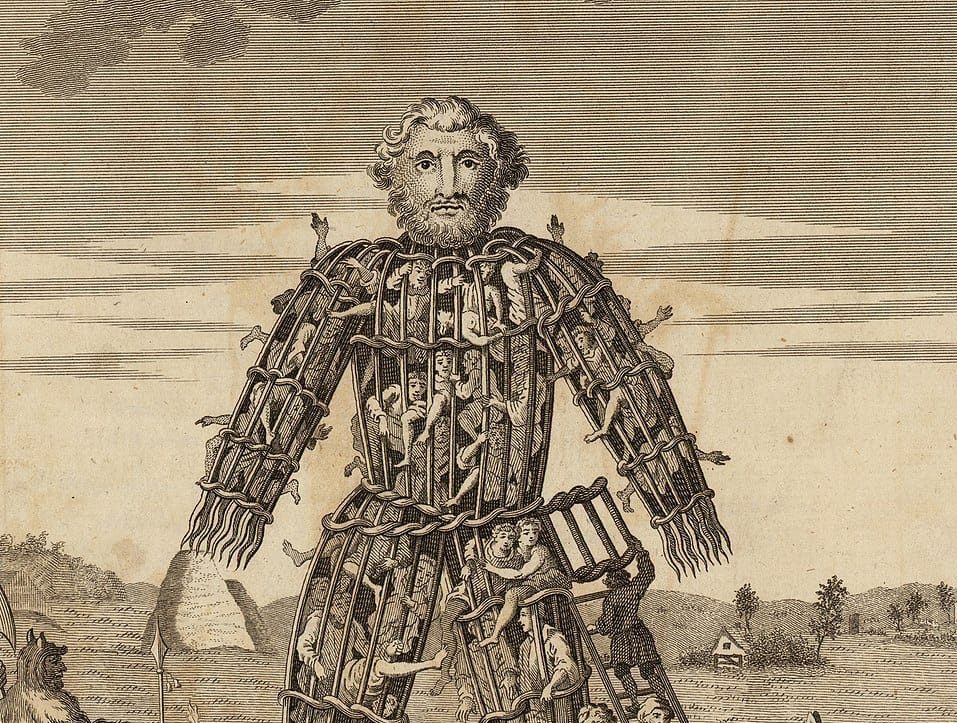
Harvest home is about a husband, wife, and daughter–Ned and Beth, and Kate Constantine–who move from New York City to a small town in Connecticut. The town, Cornwall Coombe, is a strange place. It is reminiscent of all those horror-movie towns that have appeared in subsequent years (The Wicker Man, Midsommar, The Children of the Corn). The town believes in old traditions. They also stay as far from the modern amenities of civilization as they can to enjoy a sovereign and isolated life.

The family discovers a great deal about the town, such as their appreciation for ancient festivals and corn. One of which, Harvest Home, occurs only every seven years. These practice are eventually revealed to be Pagan in nature. A series of mystifying and horrifying events assail the new family. Likewise, a series of revelations shows just how dedicated the town of Cornwall Coombe is to their traditions.

Book Blurb

From the book: “It was almost as if time had not touched the village of Cornwall Coombe. The quiet, peaceful place was straight out of a bygone era, with well-cared-for Colonial houses, a white-steepled church fronting a broad Common. Ned and Beth Constantine chanced upon the hamlet and immediately fell in love with it. This was exactly the haven they dream of. Or so they thought.

An Examination of the Folk Horror Elements

Folk Horror Defined

Thematically, because it’s folklore, Harvest Home by Thomas Tryon is a type of story that has always been with society. Perhaps more so in modern media, because it harkens back to a deep fear of the unknown. Paganism is evil according to our psyche because it is a misunderstood, maligned, and demonized product of propagandistic efforts to paint the other as a bad influence. That is to say, if it doesn’t look like what we know–if it is different–therefore it is evil. Harvest Home is a testament to our fears of this very idea and Thomas Tryon seems to execute the story with varying critical reception.

Folk horror lives within this realm because it captures the stories in our lives and spins them into their worst possible version. A haunted house story is one that involves death and murder. A story of small-town America is actually a story of tradition and sacrifice. Shirley Jackson’s “The Lottery” spells this doom in letters formed by stones, while her novel The Haunting of Hill House plays into the psychology of ghost stories. Henry James’s The Turn of the Screw mirrors this conception of ghosts as well.

Critical Reception

Kirkus Reviews stated that Harvest Home is rooted in the dark past of American history. It states: “Mr. Tryon’s story seems not only tethered to considerable earlier Americana but sometimes garroted by it–there’s too much corn to husk before the last loaded third of the book. But they say it’s been born with a caul–not only the success of the first but publisher enthusiasm now as well as selection by the Literary Guild” (Kirkus).

On Goodreads, Thomas Tryon’s Harvest Home has an overall rating of 3.83 with 9,442 ratings and 1,021 reviews. Currently, the book has 2,835 five-star reviews and 251 one-star reviews.

Five-star reviews state that Harvest Home is “an immersive experience above all things.” Additionally, reviewers stated that they “had so much fun reading it,” and that it is “an excellent, intricately woven tale.” Moreover, five-star reviewers stated that they will never “look at the corn the same way.”

Meanwhile, one-star reviews state that it has “page upon page of useless detail chronicling the passage of time.” Similarly, some reviewers “could not finish the book” due to its pacing. Similarly, one-star reviewers stated that all of the evidence of horror was right in front of the protagonist the whole time. Yet he couldn’t figure it out even though the facts are right in front of the reader.

Conclusion

Tryon’s book is a story I read when I was very young. I read it around the same time I read Edgar Allan Poe’s The Black Cat and Stephen King’s Suffer the Little Children. I was for sure unprepared for what was between the covers. Strangely enough, I also read some similar reviews in which a parent recommended this book to their kids. My experience was exactly the same, because my mother recommended it to me.

Like many one-star reviews, I did find the first part of the book a bit of a slog. However, it would be a while before I grew an appreciation for Gothic horror. When I did, I realized that Harvest Home, while a folkloric story of darkness, was more in line with Gothic tone and ambition (perhaps even Southern Gothic ambition). Sometimes, when a story creeps along, it can be that much better to savor.

As stated, there have been many incarnations of this story, perhaps inspired by parallel thinking. These include the feature film of the same year The Wicker Man (1973), and Midsommar (2019). They also include the short stories “The Children of the Corn” (1977) by Stephen King, and “The Lottery” (1948) by Shirley Jackson.